# Track with Trust: How Blockchain Ensures Transparency and Traceability in Supply Chains

Blockchain technology is revolutionizing supply chain management by creating immutable records that enhance transparency, reduce fraud, and build consumer confidence across global networks.
In today’s interconnected world, supply chains have become increasingly complex, spanning multiple countries, vendors, and transportation methods. Consumers and businesses alike demand greater visibility into product origins, manufacturing processes, and distribution channels. Traditional tracking systems often fall short, plagued by data silos, paper-based documentation, and limited real-time visibility. This is where blockchain technology emerges as a game-changing solution.
The promise of blockchain extends far beyond cryptocurrency applications. When applied to supply chain management, this distributed ledger technology creates an unchangeable, transparent record of every transaction and movement throughout a product’s journey from raw materials to end consumer. This transformation addresses critical challenges that have long plagued global commerce.
🔗 Understanding Blockchain’s Role in Modern Supply Chains
Blockchain operates as a decentralized database where information is stored across multiple nodes rather than in a single centralized location. Each transaction or data entry creates a new “block” that links to previous blocks, forming an unbreakable chain of records. This architecture makes it virtually impossible to alter historical data without detection.
In supply chain contexts, blockchain creates a shared, immutable ledger accessible to all authorized participants. Manufacturers, distributors, retailers, and even consumers can view relevant information about products as they move through the supply network. This visibility fundamentally changes how trust is established in commercial relationships.
Traditional supply chains rely heavily on intermediaries to verify authenticity and maintain records. These intermediaries add costs, time delays, and potential points of failure. Blockchain eliminates the need for many intermediaries by allowing direct verification through consensus mechanisms built into the technology itself.
Key Features That Enable Supply Chain Transformation
Several distinctive characteristics make blockchain particularly suited for supply chain applications. Immutability ensures that once data is recorded, it cannot be altered retroactively without leaving evidence. Transparency allows authorized parties to view transaction histories in real-time. Decentralization removes single points of failure and reduces vulnerability to manipulation.
Smart contracts represent another powerful feature. These self-executing agreements automatically trigger actions when predetermined conditions are met. For example, payment might automatically release when a shipment arrives at its destination, or quality certifications might automatically update when inspection results are recorded.
📦 Practical Applications Transforming Industries
The food industry has emerged as an early adopter of blockchain supply chain solutions. Contamination outbreaks that once required weeks to trace can now be identified within seconds. Walmart partnered with IBM Food Trust to track mangoes from farm to store, reducing trace time from seven days to 2.2 seconds.
This rapid traceability saves lives by enabling faster recalls and preventing contaminated products from reaching consumers. It also reduces waste by allowing surgical recalls of specific affected batches rather than broad product category recalls.
Luxury Goods and Counterfeit Prevention
The luxury goods market loses billions annually to counterfeit products. Blockchain provides authenticated digital certificates that prove provenance and authenticity. LVMH, Prada, and Cartier launched the Aura Blockchain Consortium to provide consumers with verifiable product histories.
Each luxury item receives a unique digital identity stored on the blockchain. Consumers can scan products to verify authenticity and view their complete ownership history. This transparency protects brand value while giving consumers confidence in their purchases.
Pharmaceutical Supply Chain Security 💊
Counterfeit medications represent a serious global health threat, with the WHO estimating that 1 in 10 medical products in developing countries is substandard or falsified. Blockchain creates tamper-proof records tracking pharmaceuticals from manufacturing through distribution to dispensing.
MediLedger Project connects pharmaceutical manufacturers, distributors, and hospitals on a shared blockchain network. This system verifies medication authenticity at every handoff point, ensuring patients receive genuine, properly stored medications.
Temperature-sensitive medications benefit particularly from blockchain integration with IoT sensors. These sensors continuously record storage conditions, with data automatically logged to the blockchain. If temperature excursions occur, the system creates permanent records that inform handling decisions.
🌍 Environmental Sustainability and Ethical Sourcing
Consumers increasingly demand products aligned with their values regarding environmental impact and labor practices. Blockchain enables verification of sustainability claims that previously relied on self-reporting and spot audits.
The diamond industry uses blockchain to certify conflict-free sourcing. De Beers’ Tracr platform tracks diamonds from mine to retail, ensuring gems aren’t funding armed conflicts or human rights abuses. Each diamond’s journey is permanently recorded, creating accountability throughout the supply chain.
Coffee producers use blockchain to connect farmers directly with consumers, ensuring fair compensation and sustainable farming practices. Consumers can scan QR codes to see exactly which farm produced their coffee, view farmer profiles, and verify fair trade certifications.
Carbon Footprint Tracking and Verification
Accurately measuring supply chain carbon emissions requires tracking energy consumption and transportation across multiple organizations. Blockchain creates trusted records of emissions data that can’t be manipulated to greenwash environmental performance.
Companies can use these verified records to support carbon neutrality claims, participate in emissions trading schemes, and make data-driven decisions to reduce environmental impact. This transparency helps combat climate change by making environmental performance visible and verifiable.
⚡ Technical Implementation Considerations
Successfully implementing blockchain supply chain solutions requires careful planning and consideration of several technical factors. Organizations must choose between public, private, or consortium blockchain architectures based on their specific needs.
Public blockchains like Bitcoin or Ethereum offer maximum transparency but may have privacy limitations for sensitive commercial data. Private blockchains restrict access to invited participants, protecting proprietary information while maintaining shared visibility among authorized parties. Consortium blockchains represent a middle ground, governed by groups of organizations rather than single entities.
Integration with Existing Systems
Most companies operate established enterprise resource planning (ERP) systems, warehouse management systems, and transportation management platforms. Blockchain implementations must integrate seamlessly with these existing systems rather than requiring complete technology stack replacements.
Application programming interfaces (APIs) serve as bridges connecting blockchain networks to legacy systems. These integrations allow data to flow automatically between systems, reducing manual data entry and associated errors.
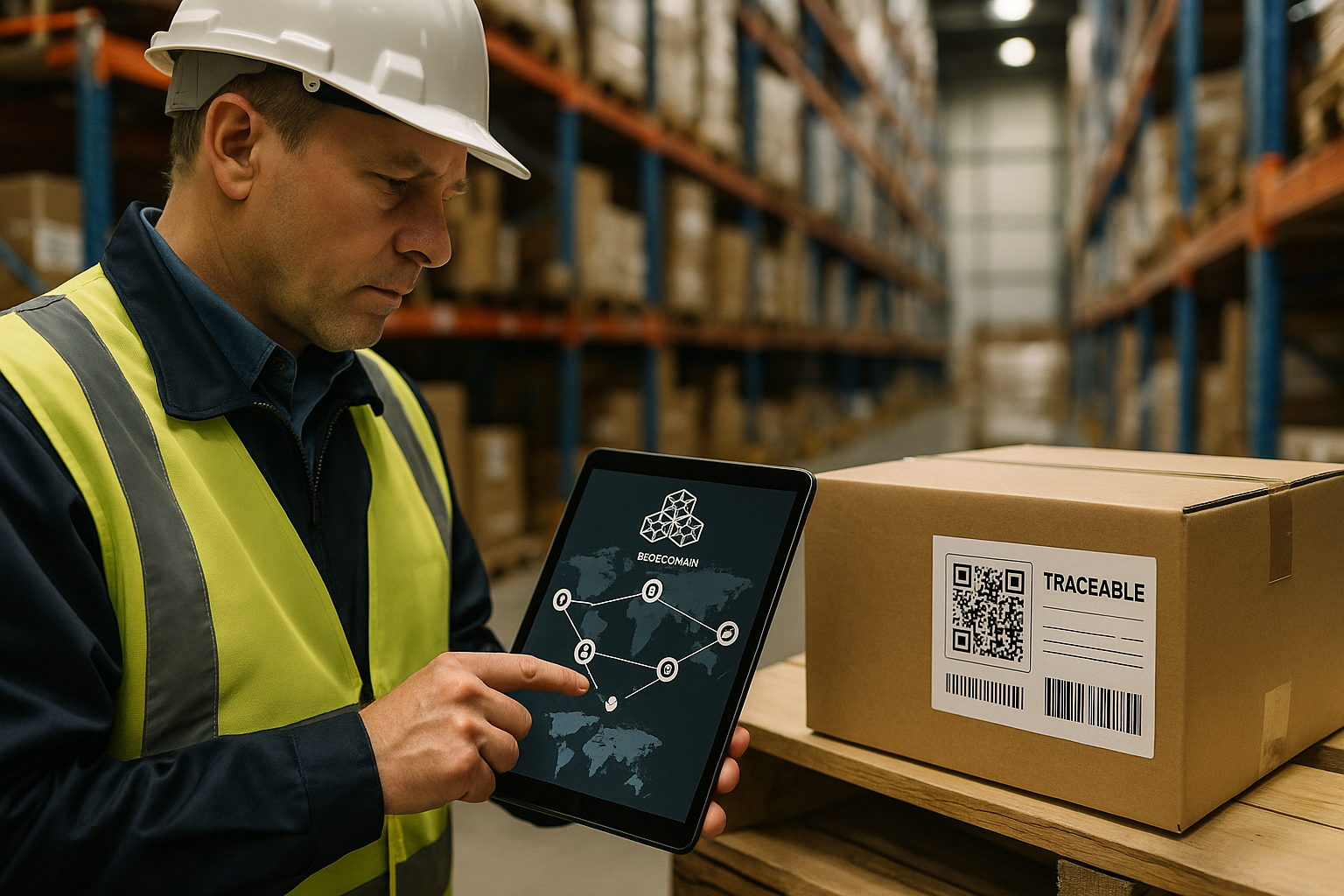
Internet of Things (IoT) devices play crucial roles in automated data collection. GPS trackers, temperature sensors, RFID tags, and other connected devices feed real-time information directly to blockchain networks, creating accurate, tamper-proof records without human intervention.
📊 Measuring Return on Investment
Blockchain implementation requires significant upfront investment in technology infrastructure, staff training, and process redesign. Organizations must carefully evaluate potential returns to justify these investments.
| Benefit Category | Measurable Impact | Typical ROI Timeline |
|---|---|---|
| Fraud Reduction | 40-60% decrease in counterfeit incidents | 12-18 months |
| Recall Efficiency | 90% reduction in trace time | 6-12 months |
| Administrative Costs | 30-50% reduction in paperwork processing | 18-24 months |
| Inventory Optimization | 20-35% reduction in excess inventory | 12-18 months |
| Customer Trust | 15-25% increase in brand loyalty metrics | 24-36 months |
Beyond direct financial returns, blockchain implementations deliver strategic advantages that may be harder to quantify but equally valuable. Enhanced brand reputation, regulatory compliance assurance, and competitive differentiation all contribute to long-term business success.
🚧 Challenges and Limitations to Address
Despite its transformative potential, blockchain technology faces significant challenges in supply chain applications. Scalability remains a primary concern, as blockchain networks can struggle to process the massive transaction volumes generated by global supply chains.
Traditional blockchain architectures like Bitcoin process transactions slowly compared to centralized databases. Newer blockchain platforms designed specifically for enterprise applications offer improved throughput, but organizations must carefully evaluate performance requirements against available technology options.
Standardization and Interoperability
Supply chains typically involve numerous independent organizations using different systems and processes. For blockchain to deliver maximum value, these diverse participants must agree on data standards, governance models, and technical protocols.
Industry consortiums work to develop common standards, but progress remains fragmented across different sectors. Organizations implementing blockchain solutions should participate in relevant standards bodies and prioritize solutions with broad industry support.
Data Privacy and Competitive Concerns
While transparency benefits supply chain management, companies legitimately protect proprietary information from competitors. Blockchain implementations must balance transparency with privacy through techniques like zero-knowledge proofs, which allow verification without revealing underlying data.
Selective disclosure mechanisms enable organizations to share different information levels with different supply chain participants. Regulators might see complete compliance data while competitors view only necessary coordination information.
🔮 Future Trends Shaping Blockchain Supply Chains
Artificial intelligence integration with blockchain creates powerful new capabilities. AI algorithms can analyze blockchain data to predict disruptions, optimize routing, and identify fraud patterns. This combination delivers insights impossible with either technology alone.
Machine learning models trained on blockchain data can predict demand fluctuations with unprecedented accuracy, enabling more efficient inventory management and production planning. Anomaly detection algorithms automatically flag unusual patterns that might indicate counterfeiting or diversion.
Tokenization and Financial Innovation
Blockchain enables tokenization of physical assets, representing products, shipments, or inventory as digital tokens that can be traded, financed, or used as collateral. This innovation unlocks new financing mechanisms for supply chain participants.
Small suppliers often struggle to access working capital while waiting for payment on delivered goods. Tokenized shipments can be sold or used as loan collateral immediately upon dispatch, improving cash flow and enabling growth.
Decentralized Autonomous Organizations
Future supply chains might operate as decentralized autonomous organizations (DAOs), where smart contracts automate governance and coordination without centralized management. These networks could self-optimize based on performance metrics and market conditions.
Such systems remain largely theoretical but represent the logical extension of blockchain’s capabilities. As technology matures and trust in automated systems grows, we may see increasingly autonomous supply networks emerge.
✨ Building Trust Through Transparency
The fundamental value proposition of blockchain in supply chains centers on trust creation through transparency. Traditional supply chains required trust in intermediaries and their record-keeping. Blockchain shifts trust to mathematics and cryptography that can be independently verified.
This shift profoundly impacts business relationships. Companies can confidently partner with unfamiliar suppliers when blockchain provides verifiable performance histories. Consumers can support brands aligned with their values when sustainability claims are transparently documented.
The technology doesn’t eliminate all trust requirements—participants must still trust that physical products match digital records and that data entered accurately represents real-world conditions. However, blockchain dramatically reduces trust requirements compared to opaque traditional systems.
🎯 Strategic Implementation Roadmap
Organizations considering blockchain supply chain implementations should begin with pilot projects addressing specific pain points rather than attempting complete system overhauls. Successful pilots demonstrate value, build internal expertise, and inform broader rollout strategies.
- Identify high-value use cases: Focus on problems where blockchain’s unique characteristics deliver clear advantages, such as products requiring authentication or multi-party coordination challenges.
- Engage supply chain partners early: Blockchain delivers maximum value through network effects, requiring participation from multiple supply chain parties.
- Start with consortium solutions: Joining established blockchain networks reduces implementation complexity and provides immediate connectivity with other participants.
- Invest in change management: Technology alone doesn’t ensure success; staff must understand new processes and embrace new ways of working.
- Establish clear governance: Define roles, responsibilities, and decision-making processes for blockchain network management before conflicts arise.
- Plan for evolution: Blockchain technology continues advancing rapidly; implementations should accommodate future upgrades and feature additions.
Patient, methodical implementation approaches typically succeed where rushed deployments struggle. Organizations should view blockchain adoption as a multi-year journey rather than a one-time project.
💡 Empowering Stakeholders Through Information Access
Perhaps blockchain’s most transformative impact comes from democratizing information access. Supply chain data traditionally concentrated in the hands of large, powerful organizations, creating information asymmetries that smaller participants struggled to overcome.
Blockchain levels this playing field by making relevant information accessible to all network participants according to agreed rules. Small farmers can prove product quality to distant buyers. Artisan manufacturers can compete with established brands by demonstrating authentic craftsmanship. Consumers can make informed choices based on verified information rather than marketing claims.
This information democratization drives economic efficiency by reducing information search costs and enabling better decision-making throughout supply networks. Markets function more effectively when participants have access to accurate, timely information.
🌟 The Path Forward for Transparent Supply Chains
Blockchain technology represents a fundamental shift in how supply chains establish trust and maintain transparency. While challenges remain around scalability, standardization, and adoption, the core value proposition continues strengthening as technology matures and implementation experience grows.
Organizations that successfully harness blockchain for supply chain management gain competitive advantages through enhanced efficiency, reduced fraud, improved sustainability verification, and stronger customer relationships. Those that delay risk falling behind as transparent, traceable supply chains become customer expectations rather than differentiators.
The journey toward fully blockchain-enabled supply chains will take years, requiring continued technology development, standards evolution, and organizational learning. However, the direction is clear: supply chains of the future will be more transparent, traceable, and trustworthy thanks to blockchain technology.
As we move forward, the question isn’t whether blockchain will transform supply chains but rather how quickly organizations can adapt to harness its potential. The companies that embrace this transformation early, learn from implementation experiences, and continuously refine their approaches will lead their industries into a more transparent, efficient, and trustworthy future.