
The transportation industry stands at a crossroads, with electric trucks and renewable fleet solutions emerging as game-changers in global logistics and commercial vehicle operations.

⚡ The Electric Revolution Transforming Commercial Transportation
The shift toward electrification in the trucking industry represents one of the most significant transformations in modern transportation history. As climate concerns intensify and fuel costs fluctuate unpredictably, businesses worldwide are recognizing that electric trucks are no longer a distant future concept but a present-day reality reshaping how goods move across cities, regions, and continents.
Major manufacturers like Tesla, Volvo, Daimler, and Rivian have invested billions in developing electric truck technology that rivals traditional diesel-powered vehicles in performance while dramatically reducing environmental impact. These investments signal a fundamental shift in industry priorities, where sustainability and operational efficiency converge to create compelling business cases for fleet operators of all sizes.
The transition isn’t merely about swapping combustion engines for electric motors. It encompasses a complete reimagining of fleet management, charging infrastructure, route optimization, and maintenance protocols. Companies adopting electric trucks are discovering that this revolution extends far beyond the vehicles themselves, touching every aspect of transportation operations.
🚛 Understanding the Electric Truck Advantage
Electric trucks offer numerous advantages that make them increasingly attractive to fleet operators. The most immediate benefit comes from reduced operating costs, with electricity typically costing significantly less than diesel fuel per mile traveled. Maintenance expenses also drop dramatically, as electric powertrains contain fewer moving parts than traditional engines, eliminating oil changes, transmission repairs, and many routine maintenance tasks that plague diesel fleets.
Beyond economics, electric trucks deliver superior torque characteristics, providing instant power delivery that enhances performance in urban delivery scenarios where frequent stops and starts are standard. Drivers consistently report smoother acceleration, quieter operation, and improved handling compared to conventional trucks, factors that contribute to reduced fatigue and increased safety on the road.
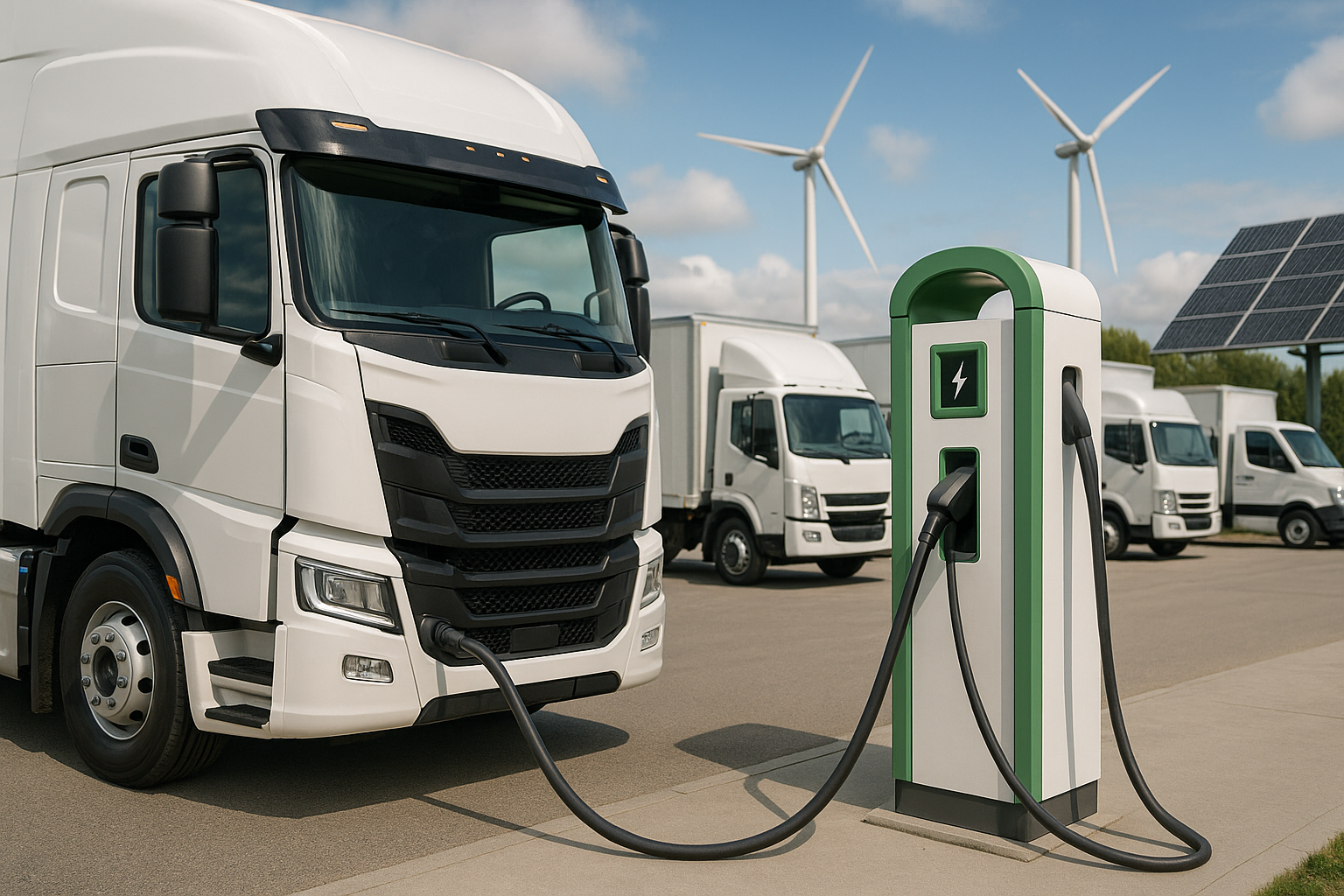
Environmental benefits extend beyond zero tailpipe emissions. When charged using renewable energy sources like solar or wind power, electric trucks achieve truly carbon-neutral operation, helping companies meet aggressive sustainability targets and respond to growing consumer demand for environmentally responsible business practices. This environmental advantage becomes increasingly valuable as cities implement low-emission zones and governments introduce stricter emissions regulations.
Real-World Performance Metrics
Early adopters of electric truck technology have reported impressive results that validate the technology’s commercial viability. Companies operating electric delivery vans and medium-duty trucks are documenting fuel cost savings ranging from 60% to 75% compared to diesel equivalents, with some operators achieving payback periods as short as three to five years despite higher upfront vehicle costs.
Range anxiety, once a significant concern, is becoming less relevant as battery technology advances. Modern electric trucks routinely achieve 150 to 300 miles on a single charge, with next-generation models promising ranges exceeding 500 miles. For many commercial applications—particularly urban delivery, last-mile logistics, and regional distribution—these ranges more than satisfy operational requirements.
🔋 Battery Technology Breakthroughs Driving Adoption
The rapid advancement in battery technology stands as the cornerstone enabling the electric truck revolution. Lithium-ion batteries have become more energy-dense, affordable, and durable, with manufacturers now offering warranties covering eight to ten years or more. This longevity assurance addresses one of the primary concerns fleet operators had about electric vehicle adoption.
Emerging battery chemistries promise even greater improvements. Solid-state batteries, currently in advanced development stages, could deliver 50% more energy density than current lithium-ion technology while charging faster and lasting longer. Lithium iron phosphate (LFP) batteries offer enhanced safety characteristics and longer cycle life, making them particularly suitable for commercial vehicles that undergo frequent charging cycles.
Battery management systems have evolved into sophisticated software platforms that optimize charging patterns, monitor cell health, and predict maintenance needs before failures occur. These intelligent systems maximize battery lifespan while ensuring trucks remain operational when needed, addressing concerns about battery degradation that previously deterred some fleet operators from electrification.
Charging Infrastructure: The Critical Enabler
The expansion of charging infrastructure represents perhaps the most crucial factor determining electric truck adoption rates. Recognizing this reality, governments and private companies are investing heavily in developing robust charging networks specifically designed for commercial vehicles. These installations differ significantly from passenger car charging stations, featuring higher power outputs and specialized connectors capable of replenishing large battery packs quickly.
Fast-charging technology has advanced remarkably, with ultra-fast chargers now capable of delivering 350 kW or more, adding 200 miles of range in approximately 30 minutes. Megawatt charging systems under development promise to charge heavy-duty electric trucks at rates comparable to diesel refueling times, eliminating one of the last significant operational disadvantages electric trucks face compared to conventional vehicles.
Fleet operators are increasingly installing private charging infrastructure at their facilities, enabling overnight charging when electricity rates are lowest and vehicles sit idle. This approach transforms vehicle downtime into an operational advantage, ensuring trucks depart each morning with full batteries without requiring drivers to visit public charging stations during their routes.
🌍 Renewable Energy Integration for Sustainable Fleet Operations
The environmental benefits of electric trucks multiply exponentially when combined with renewable energy sources. Forward-thinking companies are installing solar panels at distribution centers and depots, generating clean electricity that powers their fleets while reducing grid dependence. This integration creates closed-loop sustainable systems where vehicles operate with minimal environmental impact throughout their lifecycle.
Wind energy contracts and power purchase agreements allow companies without suitable solar installation sites to source renewable electricity for charging operations. These arrangements guarantee stable, predictable energy costs while supporting the expansion of renewable generation capacity, creating broader positive environmental impacts beyond individual fleet operations.
Energy storage systems paired with renewable generation enable even greater sustainability and cost savings. Large battery installations store excess solar generation during peak production hours, then release that energy for vehicle charging during evening and overnight periods when solar production ceases. This approach maximizes renewable energy utilization while providing grid services that can generate additional revenue streams for fleet operators.
Vehicle-to-Grid Technology: Trucks as Mobile Energy Storage
An exciting frontier in fleet electrification involves vehicle-to-grid (V2G) technology, which transforms electric trucks into mobile energy storage assets. During periods of peak electricity demand, parked trucks can discharge power back to the grid, earning revenue while supporting grid stability. This bidirectional energy flow creates new business models where vehicles generate income even when not transporting goods.
Vehicle-to-building (V2B) applications allow trucks to power facilities during outages or peak demand periods, enhancing resilience and reducing demand charges that significantly impact commercial electricity bills. As extreme weather events become more frequent, this backup power capability adds valuable operational continuity insurance beyond traditional economic benefits.
📊 Economic Analysis: Total Cost of Ownership
Comprehensive total cost of ownership (TCO) analysis reveals electric trucks often outperform diesel equivalents economically over their operational lifespan despite higher purchase prices. This economic advantage stems from multiple factors working synergistically to reduce expenses throughout the vehicle lifecycle.
| Cost Category | Diesel Truck | Electric Truck | Advantage |
|---|---|---|---|
| Purchase Price | $150,000 | $200,000 | Diesel |
| Annual Fuel/Energy | $18,000 | $6,000 | Electric |
| Annual Maintenance | $8,000 | $3,000 | Electric |
| 10-Year TCO | $410,000 | $320,000 | Electric |
These figures, based on typical commercial delivery vehicle operations covering 30,000 miles annually, demonstrate how operational savings offset higher initial investments. Actual results vary depending on duty cycles, local fuel and electricity prices, and available incentives, but the economic trend consistently favors electric trucks across diverse scenarios.
Government incentives significantly improve electric truck economics in many regions. Tax credits, grants, and accelerated depreciation provisions can reduce effective purchase prices by 30% or more, shortening payback periods and improving return on investment calculations. These incentives recognize the broader societal benefits of reduced emissions and encourage early adoption by minimizing financial risk for pioneering companies.
🏭 Major Manufacturers Leading the Charge
Tesla’s Semi, with its impressive specifications and bold design, captured widespread attention and accelerated industry electrification timelines. Promising 500-mile range and exceptional performance characteristics, the Semi has generated thousands of pre-orders from major logistics companies eager to electrify their fleets. Production deliveries commenced in late 2022, with PepsiCo among the first customers deploying these vehicles in real-world operations.
Traditional manufacturers haven’t ceded the electric truck market to newcomers. Volvo Trucks offers multiple electric models covering various commercial applications, from urban delivery to regional hauling. Daimler Trucks, through its Freightliner and Mercedes-Benz brands, has introduced electric trucks tailored to specific market segments, leveraging decades of commercial vehicle expertise to create practical, reliable electric solutions.
Rivian, initially focused on consumer vehicles, has developed electric delivery vans exclusively for Amazon, with plans to produce 100,000 units by 2030. This massive commitment demonstrates how purpose-built electric vehicles can meet specific fleet requirements more effectively than converted traditional designs, sparking similar collaborations between manufacturers and logistics providers.
Startup Innovation Driving Progress
Emerging companies are introducing innovative approaches that challenge conventional thinking about truck design and operation. Nikola focuses on hydrogen fuel cell technology as an alternative electric solution for long-haul applications where battery weight and charging time present challenges. Arrival manufactures electric vans using microfactories and novel production techniques that reduce capital requirements and environmental impact.
These startups benefit from designing electric vehicles from clean sheets, unconstrained by legacy architecture decisions that complicate traditional manufacturers’ electrification efforts. Their innovations often influence broader industry developments, accelerating technological progress and expanding the range of solutions available to fleet operators with diverse operational requirements.
🛣️ Infrastructure Challenges and Solutions
Despite impressive progress, infrastructure development remains the primary challenge constraining faster electric truck adoption. The electrical grid in many regions lacks capacity to support simultaneous fast-charging of multiple heavy-duty trucks, particularly at highway rest stops and logistics hubs where demand concentrates during peak hours.
Addressing these constraints requires coordinated action among utilities, governments, and private sector stakeholders. Grid upgrades demand significant capital investment and lengthy planning processes, creating potential bottlenecks that could slow electrification momentum if not addressed proactively. Smart charging systems that distribute load across time and coordinate with renewable generation help mitigate some concerns, but fundamental infrastructure expansion remains necessary.
Innovative solutions are emerging to bridge infrastructure gaps during the transition period. Mobile charging units provide flexibility to serve locations where permanent infrastructure isn’t yet available. Battery swapping technology, though less common in North America, offers rapid “refueling” by exchanging depleted battery packs for charged units in minutes, eliminating charging delays entirely.
📱 Fleet Management Technology Evolution
Electric trucks generate unprecedented amounts of operational data that savvy fleet managers leverage to optimize performance and reduce costs. Advanced telematics systems monitor battery health, charging patterns, energy consumption, and driving behaviors, providing insights that enable continuous improvement in fleet efficiency.
Route optimization software specifically designed for electric vehicles considers factors like terrain, weather, traffic, and charging station locations to plan the most efficient paths. These systems ensure trucks arrive at destinations with appropriate battery reserves while minimizing energy consumption and travel time, addressing range concerns through intelligent planning rather than simply larger batteries.
Predictive maintenance capabilities transform fleet management by identifying potential issues before they cause breakdowns. By analyzing battery performance trends, motor temperatures, and other parameters, these systems schedule maintenance proactively during planned downtime, maximizing vehicle availability and preventing costly roadside failures that disrupt operations and damage customer relationships.
🌟 Real-World Success Stories Inspiring Broader Adoption
Amazon operates thousands of electric delivery vans across North America, accumulating millions of miles that validate electric vehicle viability in demanding commercial applications. The company reports positive operational results and continues expanding its electric fleet rapidly, demonstrating confidence in the technology’s reliability and economics.
UPS has committed to purchasing 10,000 electric delivery trucks from Arrival, complementing existing electric vehicle deployments from various manufacturers. This multi-supplier approach allows the logistics giant to evaluate different technologies while accelerating fleet electrification and gaining operational experience across diverse vehicle types and manufacturers.
European companies are particularly aggressive in adopting electric trucks, driven by stringent emissions regulations and ambitious climate targets. DHL, DB Schenker, and numerous other logistics providers operate substantial electric truck fleets, pioneering solutions and operational practices that inform global industry developments and demonstrate feasibility across varied applications.
🔮 Future Developments Shaping Tomorrow’s Fleets
Autonomous driving technology development proceeds in parallel with electrification, and these technologies complement each other naturally. Electric trucks’ digital architecture integrates more easily with autonomous systems than traditional vehicles, while the operational predictability of autonomous vehicles optimizes battery management and charging schedules, creating synergies that enhance both technologies’ benefits.
Wireless charging technology, though currently in early commercial stages, promises to eliminate charging cables and enable automated charging at distribution centers and along roadways. Dynamic wireless charging embedded in highways could continuously replenish batteries while vehicles travel, potentially eliminating range constraints entirely for trucks operating on equipped routes.
Battery technology will continue advancing rapidly, with next-generation chemistries delivering higher energy density, faster charging, and longer lifespans. These improvements will expand the range of applications suitable for electric trucks while further improving economics, eventually making electric vehicles the obvious choice across virtually all commercial transportation segments.
💡 Strategic Considerations for Fleet Electrification
Companies planning fleet electrification should approach the transition strategically rather than attempting wholesale immediate conversion. Starting with vehicles operating predictable routes with manageable daily ranges allows organizations to gain experience, refine processes, and demonstrate success before tackling more challenging applications. This phased approach minimizes risk while building internal expertise and stakeholder confidence.
Successful electrification requires cross-functional collaboration involving operations, maintenance, facilities, finance, and sustainability teams. Each group brings essential perspectives and expertise, and their coordinated efforts ensure comprehensive planning that addresses technical, financial, and operational considerations holistically. Executive sponsorship signals organizational commitment and ensures resources align with electrification objectives.
Partnerships with utilities, charging providers, and vehicle manufacturers provide access to expertise and resources that accelerate successful transitions. These relationships can unlock favorable electricity rates, infrastructure incentives, and technical support that reduce costs and mitigate risks associated with adopting new technologies. Collaborative approaches leverage collective knowledge and shared interests to overcome challenges individual companies might struggle to address independently.
🚀 Accelerating Toward an Electric Future
The transportation industry’s electric revolution has reached an inflection point where the question has shifted from “if” to “when” and “how fast.” Technology maturity, improving economics, regulatory pressure, and corporate sustainability commitments are converging to create irresistible momentum toward fleet electrification across all vehicle classes and operational segments.
Companies that embrace this transition early position themselves advantageously, gaining operational experience, capturing available incentives, and building competitive advantages in efficiency and sustainability. Those delaying risk falling behind as electric trucks become industry standard and fossil fuel vehicles face increasing regulatory restrictions and resale value challenges.
The path forward requires vision, commitment, and strategic investment, but the destination promises cleaner air, lower operating costs, and transportation systems aligned with planetary health and human wellbeing. Electric trucks and renewable fleet solutions aren’t merely alternatives to traditional approaches—they represent the future of commercial transportation, a future that’s arriving faster than many anticipated and delivering benefits exceeding early expectations. The revolution is underway, transforming how goods move and businesses operate, creating opportunities for those ready to lead rather than follow in this historic industry transformation.