Warehouse operations are evolving rapidly, and automated storage and retrieval systems are revolutionizing how businesses manage inventory, reduce costs, and maximize operational efficiency.

🚀 Understanding Automated Storage and Retrieval Systems (AS/RS)
Automated Storage and Retrieval Systems represent a sophisticated technological solution that has transformed traditional warehousing into intelligent, data-driven operations. These systems use computer-controlled methods to automatically place and retrieve loads from defined storage locations with minimal human intervention.
The core principle behind AS/RS technology involves integrated software, robotics, and mechanical equipment working in harmony to streamline material handling processes. Unlike conventional storage methods that rely heavily on manual labor and forklifts, automated systems optimize vertical space utilization while significantly reducing retrieval times and operational errors.
Modern AS/RS solutions range from simple mechanized systems to complex multi-level installations featuring advanced robotics, conveyor systems, and artificial intelligence algorithms. The technology adapts to various inventory types, from small components and cartons to full pallets and oversized items.
💼 The Business Case for Warehouse Automation
Organizations investing in automated storage and retrieval systems typically experience transformative benefits across multiple operational dimensions. The financial justification extends beyond simple cost reduction, encompassing strategic advantages that position companies competitively in increasingly demanding markets.
Space Optimization That Transforms Facility Economics
Traditional warehouses utilize only 25-30% of available cubic space, leaving substantial volumes underutilized. AS/RS technology exploits vertical dimensions efficiently, often increasing storage density by 85% or more compared to conventional racking systems. This dramatic improvement means businesses can store significantly more inventory within existing facilities or downsize to smaller, less expensive spaces.
The elimination of wide aisles required for forklift operation further maximizes usable storage area. Automated systems operate in narrower corridors with precision that human operators cannot match, converting previously wasted space into productive storage capacity.
Labor Cost Reduction and Workforce Optimization
Labor represents one of the largest ongoing expenses in warehouse operations. Automated systems dramatically reduce staffing requirements for routine storage and retrieval tasks, allowing organizations to redeploy human talent toward higher-value activities requiring judgment, problem-solving, and customer interaction.
Beyond direct cost savings, AS/RS addresses the persistent challenge of warehouse labor shortages. As finding qualified forklift operators becomes increasingly difficult and expensive, automation provides operational continuity independent of labor market fluctuations.
⚙️ Key Components of Modern AS/RS Technology
Contemporary automated storage and retrieval systems integrate multiple technological components that work cohesively to deliver seamless operation. Understanding these elements helps organizations make informed decisions when evaluating automation solutions.
Storage Structures and Racking Systems
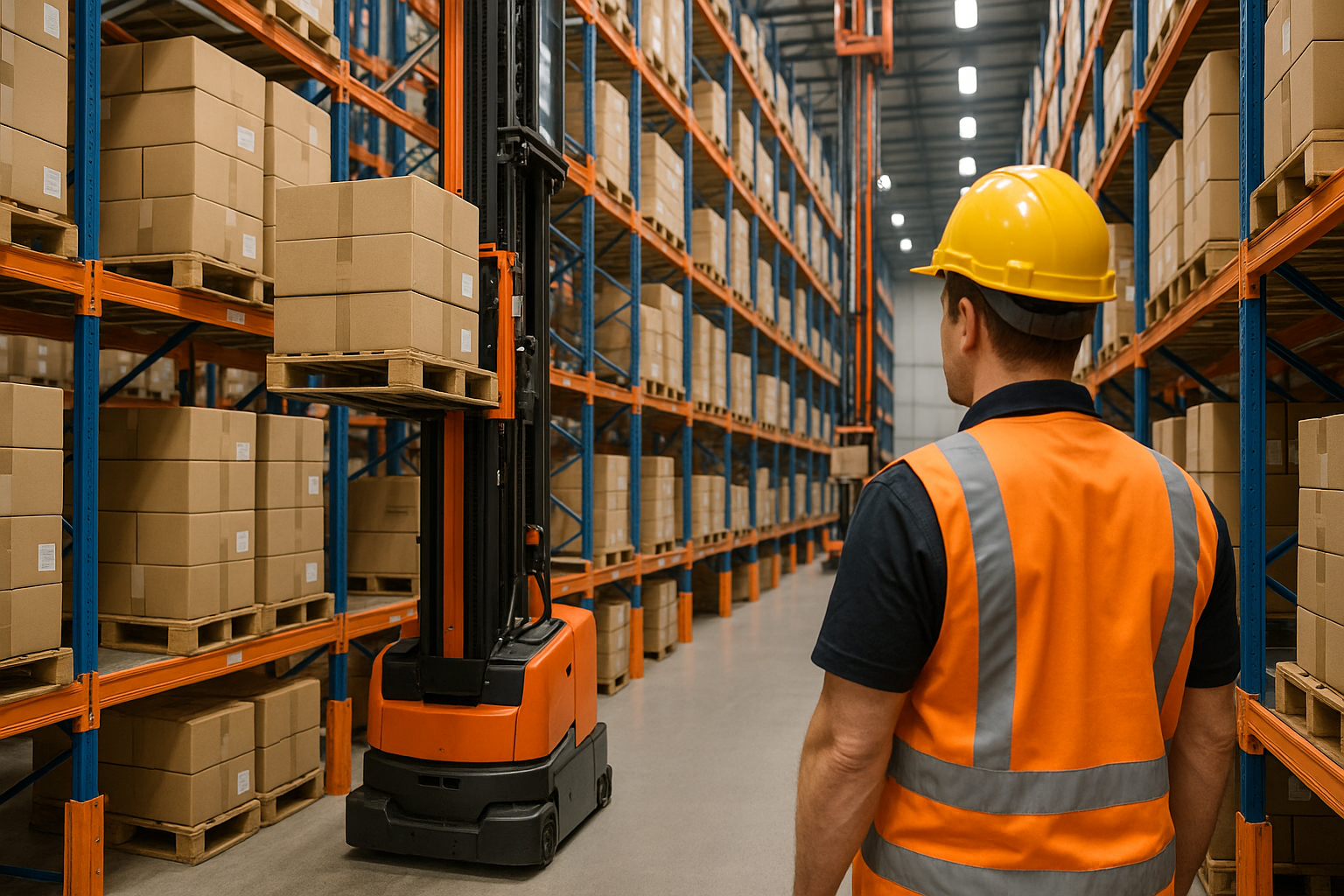
The physical infrastructure forms the foundation of any AS/RS implementation. High-density racking systems are specifically engineered to support automated equipment while maximizing storage capacity. These structures extend vertically to ceiling heights that would be impractical or dangerous for manual operations, often reaching 100 feet or more.
Racking configurations vary based on inventory characteristics and operational requirements. Single-deep, double-deep, and mobile racking systems each offer distinct advantages for specific applications, from high-velocity picking operations to long-term bulk storage.
Automated Retrieval Mechanisms
The retrieval equipment represents the system’s operational heart. Stacker cranes, shuttles, robotic arms, and conveyor networks move inventory between storage locations and input/output stations with remarkable precision and speed.
Modern retrieval mechanisms incorporate advanced sensors, vision systems, and positioning technology that enable millimeter-level accuracy. These systems operate continuously with minimal maintenance requirements, handling thousands of transactions daily without fatigue or error rates that plague manual operations.
Warehouse Management Software Integration
Software intelligence transforms mechanical automation into an optimized system. Warehouse Management Systems (WMS) and Warehouse Control Systems (WCS) orchestrate all AS/RS activities, from inventory allocation and retrieval sequencing to predictive maintenance and performance analytics.
Real-time inventory visibility eliminates discrepancies that commonly affect manual warehouses. Every item location is tracked digitally, providing instant access to stock levels, movement history, and availability status across multiple facilities.
📊 Types of Automated Storage Solutions for Different Business Needs
The automated storage landscape offers diverse solutions tailored to specific operational requirements, inventory characteristics, and throughput demands. Selecting the appropriate system type critically impacts implementation success and return on investment.
Unit Load AS/RS for Pallet Handling
Unit load systems handle full pallets or large containers, making them ideal for bulk storage and distribution operations. These robust installations feature heavy-duty stacker cranes capable of managing loads exceeding 2,500 pounds, operating in aisles as narrow as six feet.
Manufacturing facilities, third-party logistics providers, and large distribution centers commonly deploy unit load AS/RS to manage high-volume pallet movements efficiently. The systems excel in applications requiring buffer storage, order consolidation, and cross-docking operations.
Mini-Load Systems for Small Parts
Mini-load AS/RS handles smaller items stored in totes, trays, or cartons. These systems provide exceptional density for parts, components, tools, and retail merchandise that don’t require full pallet storage.
Electronics manufacturers, pharmaceutical distributors, and e-commerce fulfillment operations benefit significantly from mini-load automation. The systems deliver individual items or containers to ergonomic workstations, eliminating worker travel time and reducing picking errors.
Vertical Lift Modules and Vertical Carousels
Vertical storage solutions bring inventory to operators rather than sending workers to storage locations. Vertical Lift Modules (VLMs) use computer-controlled extractors to retrieve trays from vertical storage columns, while vertical carousels rotate stored items to access openings.
These compact systems fit within existing facilities without extensive structural modifications, making them attractive for operations seeking automation benefits without complete warehouse redesign. They excel in applications requiring secure storage, controlled access, and high picking accuracy.
Automated Guided Vehicles and Mobile Robots
Autonomous mobile robots (AMRs) and automated guided vehicles (AGVs) provide flexible automation that adapts to changing operational needs. These mobile systems transport materials throughout facilities following virtual paths or physical guides, interfacing with fixed automation and manual processes seamlessly.
The flexibility of mobile robotics appeals to operations experiencing growth, seasonal fluctuations, or frequent layout changes. Unlike fixed installations, mobile solutions can be redeployed, scaled, or reconfigured without major capital investment.
🎯 Strategic Implementation Considerations
Successfully implementing automated storage and retrieval systems requires careful planning, realistic expectations, and systematic execution. Organizations that approach automation strategically achieve faster returns and smoother transitions than those rushing implementation without adequate preparation.
Conducting Comprehensive Needs Assessment
Effective automation begins with thorough analysis of current operations, pain points, and future growth projections. Organizations must evaluate inventory characteristics, order profiles, throughput requirements, and existing infrastructure constraints before selecting appropriate technology.
Data-driven decision making proves essential. Historical transaction data, SKU velocity analysis, and seasonal demand patterns inform system sizing and configuration decisions that align automation capabilities with actual operational requirements.
Integration with Existing Systems and Processes
AS/RS technology rarely operates in isolation. Seamless integration with enterprise resource planning (ERP) systems, order management platforms, and transportation management software ensures information flows accurately across the entire supply chain.
Organizations should prioritize vendors offering robust integration capabilities and proven implementation methodologies. Compatibility issues discovered late in implementation create costly delays and compromise system effectiveness.
Change Management and Workforce Preparation
Technology implementation alone doesn’t guarantee success. Organizations must prepare their workforce for operational changes, provide comprehensive training, and address concerns about automation’s impact on employment.
Successful implementations reposition workers from physically demanding tasks to monitoring, exception handling, and system optimization roles. This transition requires training programs, clear communication, and leadership commitment to workforce development.
💡 Emerging Trends Shaping AS/RS Future
The automated storage and retrieval landscape continues evolving as emerging technologies create new capabilities and operational possibilities. Organizations planning long-term automation strategies should consider these developing trends.
Artificial Intelligence and Machine Learning Integration
AI-powered systems optimize storage location assignments dynamically based on demand patterns, seasonality, and order correlation. Machine learning algorithms continuously improve operational efficiency by analyzing performance data and adjusting parameters autonomously.
Predictive analytics anticipate maintenance requirements before failures occur, minimizing downtime and extending equipment lifespan. These intelligent systems learn from experience, becoming more efficient over time without manual reprogramming.
Internet of Things and Sensor Technology
IoT sensors throughout automated systems provide unprecedented visibility into operational status, environmental conditions, and equipment health. Real-time monitoring enables proactive management and rapid response to anomalies before they impact operations.
Temperature, humidity, vibration, and other environmental sensors ensure proper storage conditions for sensitive inventory. Connected systems alert operators immediately when parameters exceed acceptable ranges, protecting inventory value and regulatory compliance.
Collaborative Robotics and Human-Machine Interaction
Next-generation AS/RS incorporates collaborative robots designed to work safely alongside human workers. These systems combine automation’s consistency with human judgment and adaptability, creating hybrid operations that leverage both strengths.
Advanced safety systems using vision technology, proximity sensors, and intelligent controls enable robots to operate in shared spaces without traditional safety caging, increasing flexibility while maintaining worker protection.
🔍 Measuring AS/RS Performance and ROI
Quantifying automated system performance ensures ongoing optimization and validates investment decisions. Organizations should establish clear metrics and monitoring processes before implementation to track progress and identify improvement opportunities.
Key Performance Indicators for Automated Operations
Throughput metrics measure transaction volumes, cycle times, and order fulfillment rates. Inventory accuracy reflects system precision and data integrity. Space utilization quantifies storage density improvements. Labor productivity compares output per worker before and after automation.
Equipment utilization rates indicate whether systems operate near capacity or possess excess capability. Maintenance metrics track downtime, repair frequency, and preventive maintenance effectiveness.
Calculating Total Cost of Ownership
Comprehensive ROI analysis considers initial capital investment, ongoing maintenance costs, energy consumption, software licensing, and operational savings. Accurate projections account for technology depreciation, potential system expansions, and long-term value beyond immediate cost reduction.
Most organizations achieve payback periods between three and seven years, depending on system complexity, operational volume, and labor cost differentials. However, strategic benefits including improved customer service, enhanced accuracy, and operational scalability often justify investments beyond simple financial calculations.
🌟 Real-World Success Stories and Applications
Across industries, automated storage and retrieval systems deliver measurable improvements that transform competitive positioning and operational capabilities.
Major e-commerce retailers have deployed massive AS/RS installations handling millions of SKUs with same-day fulfillment capabilities. Pharmaceutical distributors use automated systems ensuring regulatory compliance through precise inventory control and complete traceability. Automotive manufacturers coordinate just-in-time component delivery using AS/RS that synchronizes with production schedules.
Cold storage operations benefit particularly from automation, reducing energy costs by minimizing door openings and limiting human exposure to extreme temperatures. Food distributors maintain strict FIFO inventory rotation automatically, reducing waste and ensuring product freshness.
🛠️ Overcoming Implementation Challenges
Despite significant benefits, AS/RS implementation presents challenges requiring careful management and realistic expectations.
Substantial capital investment creates financial barriers for smaller organizations, though increasingly affordable modular solutions expand access to automation technology. Implementation timelines extending 12-24 months require patience and commitment that some organizations underestimate.
Technical complexity demands specialized expertise for design, installation, and ongoing support. Organizations should evaluate internal capabilities honestly and engage qualified system integrators when necessary.
Operational disruption during implementation requires careful planning to maintain business continuity. Phased deployments, parallel operations during transition periods, and comprehensive contingency planning mitigate risks associated with major system changes.
🚦 Taking the First Steps Toward Automation
Organizations considering automated storage and retrieval systems should begin with education, assessment, and strategic planning rather than immediate technology selection.
Visiting operational AS/RS installations provides invaluable perspective on technology capabilities and operational realities. Industry associations, trade shows, and vendor demonstrations offer opportunities to observe systems firsthand and ask detailed questions.
Engaging experienced consultants for preliminary assessments helps identify appropriate automation levels, realistic timelines, and expected returns. These initial investments in planning prevent costly mistakes and align technology choices with strategic objectives.
Starting with pilot projects or modular implementations allows organizations to gain experience, demonstrate value, and build internal expertise before committing to comprehensive automation programs.
🎓 Building Long-Term Automation Strategy
Successful warehouse automation extends beyond single technology implementations to comprehensive, evolving strategies that adapt to changing business requirements.
Forward-thinking organizations develop multi-year automation roadmaps balancing immediate needs with future capabilities. These plans consider technology evolution, facility expansion possibilities, and integration with broader supply chain digitization initiatives.
Continuous improvement processes ensure automated systems deliver maximum value throughout their operational lives. Regular performance reviews, operator feedback sessions, and technology updates maintain system relevance as business conditions evolve.
The warehouse of the future increasingly resembles sophisticated production environments where technology, data, and human expertise combine to deliver unprecedented efficiency, accuracy, and responsiveness. Automated storage and retrieval systems form the foundation of this transformation, enabling organizations to meet rising customer expectations while controlling costs and maintaining competitive advantage in dynamic markets.