
The fusion of 5G technology and robotics is creating unprecedented opportunities for real-time control systems, transforming industries from manufacturing to healthcare with remarkable speed and precision.

🚀 The Dawn of Ultra-Low Latency Robotics
Traditional wireless networks have long constrained the potential of remote robotics control, introducing delays that made precision operations nearly impossible. The introduction of 5G technology has fundamentally altered this landscape, offering latency as low as 1 millisecond compared to 4G’s 50-200 milliseconds. This dramatic reduction represents more than just a numerical improvement—it opens entirely new possibilities for applications where split-second responses determine success or failure.
In robotic systems, latency directly impacts performance, safety, and operational accuracy. When controlling a robotic arm in a surgical procedure or managing an autonomous vehicle navigating through traffic, every millisecond counts. The near-instantaneous communication enabled by 5G networks creates a seamless connection between operator commands and robotic responses, making remote control feel as natural as direct, wired connections.
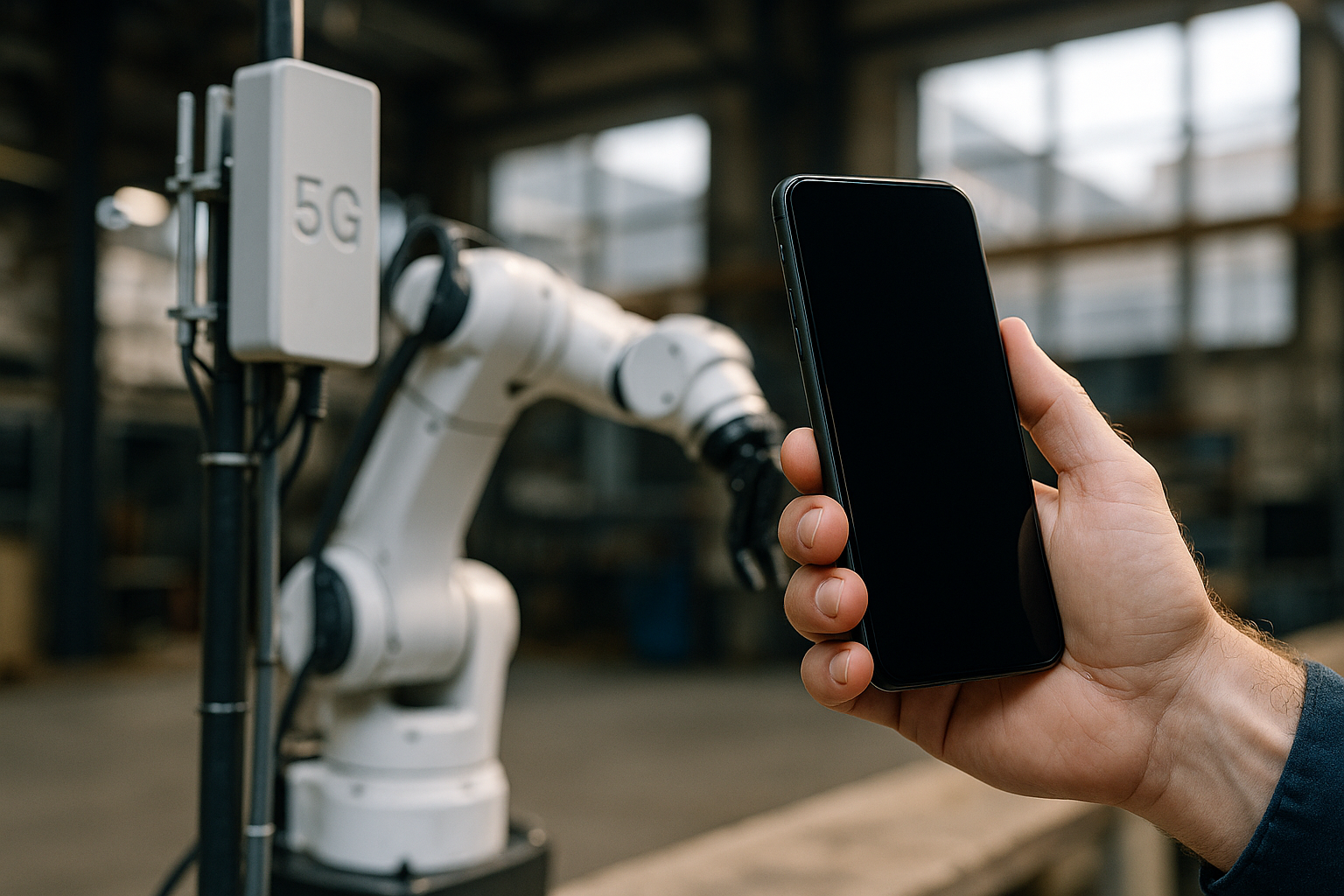
Industrial robotics manufacturers have already begun redesigning their systems to leverage 5G capabilities. Companies are replacing traditional wired connections with wireless alternatives, reducing installation complexity while increasing flexibility in factory floor layouts. This shift represents a fundamental reimagining of how production facilities can be configured and reconfigured to meet changing demands.
⚡ Understanding 5G’s Technical Advantages for Robotics
The revolutionary impact of 5G on robotics stems from three core technological capabilities that work synergistically to enable unprecedented control precision. These features transform theoretical possibilities into practical, deployable solutions across diverse applications.
Ultra-Reliable Low Latency Communications (URLLC)
URLLC represents the cornerstone of 5G’s robotics revolution. This technology guarantees consistent, predictable response times even under network congestion. For robotic control systems, this reliability proves essential—a surgical robot cannot tolerate inconsistent communication delays, nor can an autonomous vehicle afford unpredictable response times. URLLC ensures that critical commands reach their destination within strictly defined timeframes, with reliability exceeding 99.999%.
Massive Machine-Type Communications (mMTC)
Modern robotic ecosystems rarely operate in isolation. They exist within networks of sensors, cameras, other robots, and control systems. 5G’s mMTC capability supports up to one million connected devices per square kilometer, enabling dense deployments of robotic systems without network congestion. This capacity allows warehouses to operate hundreds of autonomous robots simultaneously, all communicating in real-time without interference or degradation.
Enhanced Mobile Broadband (eMBB)
Robotic control increasingly relies on rich data streams—high-resolution video feeds, detailed sensor readings, and complex command sequences. 5G’s enhanced bandwidth, reaching up to 20 Gbps, accommodates these data-intensive requirements effortlessly. Remote operators can view multiple HD video streams while simultaneously receiving telemetry data and sending precise control inputs, all without compromising system responsiveness.
🏭 Transforming Manufacturing Through Connected Robotics
Smart factories represent the most immediate beneficiaries of 5G-enabled robotics. Traditional manufacturing robots operate within strictly defined parameters, following pre-programmed sequences with limited adaptability. The combination of 5G connectivity and advanced robotics creates dynamic systems capable of real-time adjustment based on changing conditions.
Production lines can now feature mobile robotic units that move freely throughout facilities, collaborating with stationary equipment and human workers. These collaborative robots, or cobots, require constant communication to ensure safety and coordination. 5G’s low latency enables immediate responses to unexpected situations—if a human worker enters a robot’s operational zone, the system can halt movement within milliseconds, preventing accidents while maintaining productivity.
Quality control has been revolutionized through 5G-connected visual inspection systems. High-resolution cameras mounted on robotic arms transmit detailed imagery to cloud-based AI systems that identify defects in real-time. The immediate feedback loop allows robots to adjust their operations instantly, reducing waste and improving product consistency without slowing production rates.
Predictive maintenance benefits enormously from 5G connectivity. Sensors embedded throughout robotic systems continuously monitor performance parameters, transmitting data for analysis. Advanced algorithms detect anomalies before failures occur, automatically scheduling maintenance and ordering replacement parts. This proactive approach minimizes downtime and extends equipment lifespan significantly.
🏥 Revolutionizing Healthcare with Telepresence Surgery
Perhaps no application demonstrates 5G’s transformative potential more dramatically than remote robotic surgery. Skilled surgeons can now operate on patients thousands of miles away, guiding robotic instruments with precision that rivals in-person procedures. This capability addresses critical healthcare access disparities, bringing world-class surgical expertise to underserved regions.
The first 5G-enabled remote surgery was performed in 2019, when a surgeon in China successfully operated on a patient 30 miles away. Since then, the technology has advanced rapidly, with procedures becoming more complex and distances increasing. The key enabling factor remains 5G’s ultra-low latency—surgeons require real-time haptic feedback to feel tissue resistance and adjust pressure accordingly.
Beyond surgery, 5G-connected robots are transforming patient care delivery. Mobile robots navigate hospital corridors autonomously, delivering medications, meals, and supplies while avoiding obstacles and adapting to changing floor plans. These systems reduce burden on healthcare staff, allowing them to focus on direct patient care while robots handle logistics.
Rehabilitation robotics has gained new capabilities through 5G connectivity. Patients recovering from strokes or injuries work with robotic exoskeletons that provide precisely calibrated assistance. Physical therapists can monitor and adjust therapy parameters remotely in real-time, providing expert care without requiring patients to travel to specialized facilities.
🚗 Autonomous Vehicles: The Ultimate Robotics Challenge
Autonomous vehicles represent perhaps the most demanding application of real-time robotics control. These mobile platforms must process vast amounts of sensor data, make split-second decisions, and coordinate with other vehicles and infrastructure—all while traveling at highway speeds. 5G technology provides the communication backbone essential for safe, reliable autonomous operation.
Vehicle-to-everything (V2X) communication enabled by 5G allows autonomous vehicles to share information about road conditions, traffic patterns, and potential hazards. When one vehicle detects an obstacle or slippery surface, it instantly broadcasts this information to nearby vehicles, allowing them to adjust their behavior proactively. This collective intelligence dramatically improves safety compared to vehicles operating with only local sensor data.
Remote operation capabilities provide essential safety backstops for autonomous systems. When vehicles encounter situations beyond their autonomous capabilities, human operators can take control remotely via 5G connections. The low latency ensures responsive control despite physical separation, allowing specialized operators to assist multiple vehicles from centralized locations.
Fleet coordination reaches new levels of efficiency through 5G connectivity. Logistics companies optimize routing for hundreds of vehicles simultaneously, adjusting plans in real-time based on traffic conditions, delivery priorities, and vehicle availability. The result is reduced congestion, lower fuel consumption, and improved delivery reliability.
🏗️ Construction and Dangerous Environments
Construction sites present numerous hazards to human workers—heavy equipment, unstable structures, and extreme conditions create persistent dangers. 5G-connected robotic systems allow operators to perform dangerous tasks remotely, eliminating risk while maintaining or improving productivity.
Demolition robots equipped with hydraulic attachments can tear down unsafe structures while operators monitor operations from safe distances. High-definition cameras provide multiple viewing angles, while sensors detect structural instability before it becomes critical. The real-time control enabled by 5G ensures operators maintain precise control despite not being physically present.
Mining operations increasingly rely on remote-controlled equipment for extraction in hazardous underground environments. Operators on the surface guide excavators, loaders, and transport vehicles through complex underground networks. 5G connectivity penetrating deep underground through distributed antenna systems ensures reliable communication even in challenging radio environments.
Disaster response benefits tremendously from robotics capabilities enhanced by 5G. When earthquakes, floods, or industrial accidents create environments too dangerous for human responders, robots can enter to assess damage, locate survivors, and begin recovery operations. Remote experts guide these robots through complex situations, making real-time decisions based on sensor data and video feeds.
🔬 Research and Development: Pushing Boundaries
Academic and industrial research laboratories are exploring the frontiers of what 5G-enabled robotics can achieve. Swarm robotics experiments involve coordinating dozens or hundreds of small robots to accomplish tasks collectively. The massive connectivity capacity of 5G makes these experiments practical, allowing researchers to test coordination algorithms at scales previously impossible.
Soft robotics—systems built from flexible materials rather than rigid components—requires sophisticated control algorithms to manage their complex movements. 5G enables cloud-based processing of sensor data and control calculations, allowing even small, simple robots to exhibit sophisticated behaviors by leveraging remote computational resources.
Human-robot collaboration research focuses on creating intuitive interfaces that allow non-expert users to guide robotic systems effectively. Virtual reality control systems connected via 5G provide immersive experiences where operators feel present at the robot’s location. This natural interaction paradigm promises to democratize robotics, making advanced capabilities accessible to broader user bases.
📊 Overcoming Implementation Challenges
Despite its transformative potential, deploying 5G-enabled robotics faces significant challenges that require careful consideration and strategic solutions. Understanding these obstacles is essential for organizations planning implementations.
- Infrastructure deployment costs: 5G networks require dense base station deployments, particularly for industrial applications requiring guaranteed coverage and performance. Organizations must often invest in private 5G networks or work closely with carriers to ensure adequate coverage.
- Security considerations: Wireless communications introduce potential vulnerabilities that wired connections avoided. Robust encryption, authentication, and intrusion detection systems are essential to prevent unauthorized access to robotic control systems.
- Spectrum allocation: Different regions allocate radio spectrum differently, creating challenges for equipment manufacturers serving global markets. Coordinating with regulatory authorities and ensuring equipment compatibility across jurisdictions requires careful planning.
- Integration with legacy systems: Most industrial facilities contain substantial investments in existing robotics and control systems. Creating smooth integration paths between legacy equipment and new 5G-enabled systems without requiring complete replacements is technically challenging but economically essential.
- Skill gaps: Deploying and maintaining 5G robotics systems requires expertise spanning robotics, networking, and software development. Organizations face challenges recruiting and training personnel with necessary interdisciplinary skills.
💡 Future Horizons: What Comes Next
The evolution of 5G technology and robotics capabilities continues rapidly, with emerging developments promising even more transformative applications. Network slicing technology allows creation of virtual networks with customized characteristics optimized for specific applications. Robotics operations requiring ultra-low latency can receive guaranteed network resources independent of other traffic, ensuring consistent performance.
Edge computing integration brings processing power closer to robotic systems, reducing reliance on distant cloud servers. By performing critical computations at network edges, systems achieve even lower latency while reducing bandwidth requirements. This architecture enables more sophisticated autonomous behaviors while maintaining real-time responsiveness.
Artificial intelligence advancement continues amplifying the capabilities of 5G-connected robots. Machine learning models trained in the cloud can be deployed to edge devices, allowing robots to make intelligent decisions locally while still benefiting from continuous learning from fleet-wide experiences. This combination of local intelligence and cloud connectivity creates systems that improve continuously through operation.
The progression toward 6G networks is already underway, with research targeting latencies below 0.1 milliseconds and bandwidths exceeding 100 Gbps. These capabilities will enable entirely new robotics applications currently constrained by physical limitations of 5G technology.
🌐 Global Impact and Economic Implications
The economic implications of 5G-enabled robotics extend far beyond the technology sector. Manufacturing productivity improvements drive economic growth while reducing costs for consumers. Healthcare access improvements in underserved regions can address persistent health disparities, improving quality of life while reducing long-term healthcare costs.
Labor markets will experience significant disruption as robotics capabilities expand into new domains. While some jobs will be automated, new opportunities emerge in robot operation, maintenance, programming, and oversight. The transition requires thoughtful workforce development strategies to ensure workers can adapt to changing skill requirements.
Environmental benefits emerge from improved efficiency enabled by 5G robotics. Optimized logistics reduce fuel consumption and emissions. Precision manufacturing minimizes waste. Remote operation capabilities reduce need for worker commuting to dangerous or remote locations. These incremental improvements accumulate into substantial environmental benefits as adoption scales.
Developing nations have opportunities to leapfrog traditional infrastructure limitations by deploying 5G robotics systems directly. Rather than building extensive wired infrastructure, these regions can establish wireless networks supporting advanced automation, potentially accelerating economic development and improving living standards.
🎯 Making 5G Robotics Reality in Your Organization
Organizations considering 5G robotics implementations should approach deployment strategically, beginning with pilot projects that demonstrate value before scaling. Identify specific pain points where real-time robotics control addresses genuine operational challenges—improved safety, increased productivity, or enhanced quality.
Partner selection proves critical for successful implementations. Network providers, robotics vendors, and systems integrators must collaborate effectively to deliver integrated solutions. Evaluate potential partners based on their experience with similar deployments, technical capabilities, and long-term support commitments.
Begin with private 5G networks for critical applications requiring guaranteed performance. While public networks continue improving, private networks provide control over coverage, capacity, and quality of service essential for mission-critical robotics applications. Costs continue declining as equipment matures and deployment expertise grows.
Invest in workforce development early in the implementation process. Provide training opportunities for existing staff while recruiting new talent with necessary expertise. Consider partnerships with educational institutions to develop pipelines of qualified personnel as your robotics capabilities expand.
🔮 The Connected Future Taking Shape Today
The convergence of 5G connectivity and advanced robotics represents more than incremental technological improvement—it fundamentally reimagines what’s possible across nearly every industry. The ultra-low latency, massive connectivity, and high bandwidth of 5G networks eliminate constraints that previously limited robotics applications to specialized niches.
As networks mature and robotics capabilities advance, we’re witnessing the emergence of truly intelligent, connected systems that collaborate seamlessly with human operators and each other. The transformation affects manufacturing efficiency, healthcare accessibility, transportation safety, and countless other domains in profound ways.
Organizations embracing these technologies thoughtfully position themselves for competitive advantage in an increasingly automated world. Those that hesitate risk falling behind as competitors leverage 5G robotics to improve quality, reduce costs, and deliver superior customer experiences.
The revolution in real-time robotics control enabled by 5G is not a distant future scenario—it’s happening now, reshaping industries and creating opportunities for those ready to harness its power. The question is no longer whether to adopt these technologies, but how quickly and strategically organizations can implement them to maximize benefits while managing risks. The future of robotics is wireless, intelligent, and connected at lightning speed.