
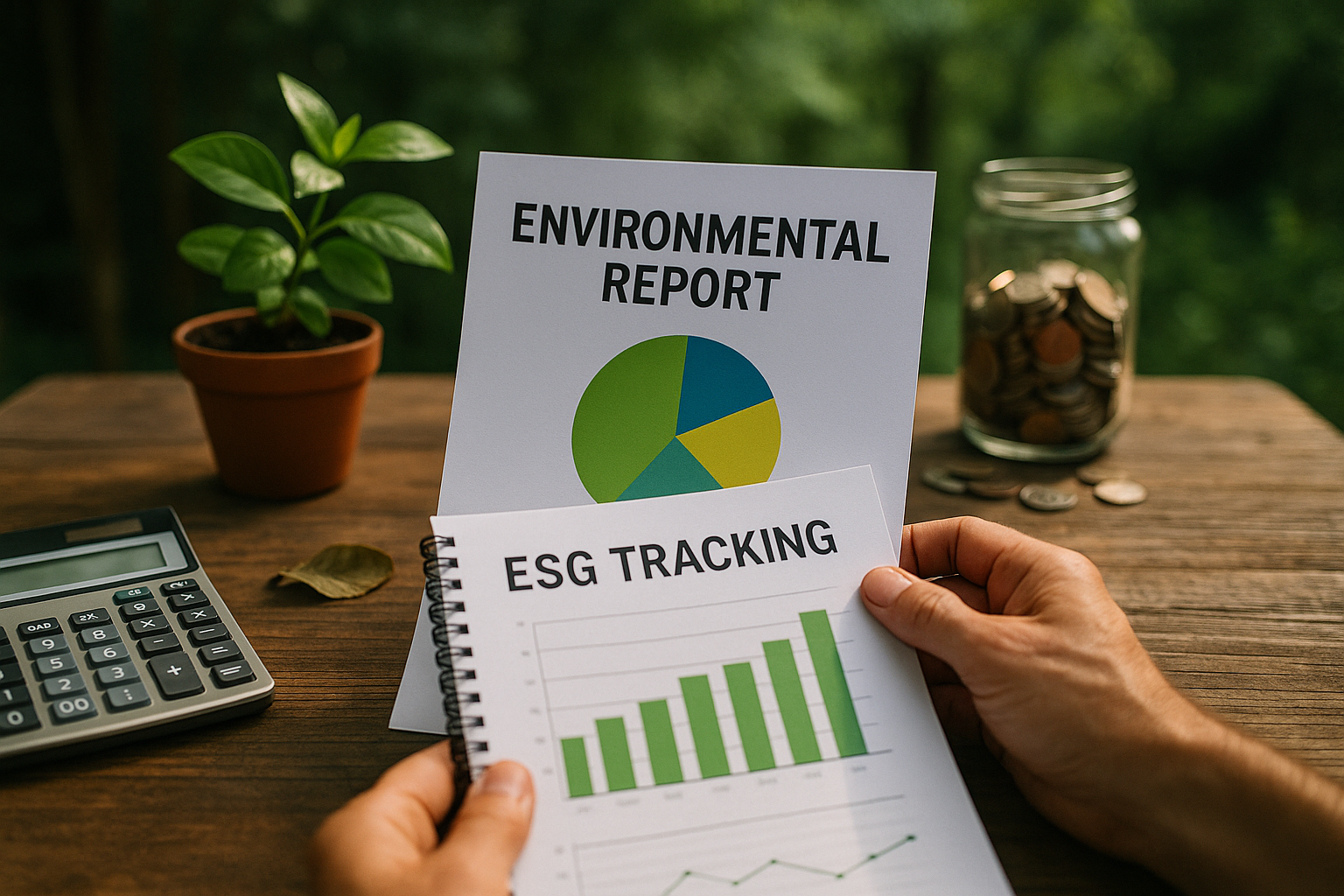
Environmental impact reporting and ESG tracking are transforming how businesses create value, turning sustainability from a cost center into a strategic advantage that drives profitability.

🌍 Why Environmental Reporting Has Become Business-Critical
The business landscape has fundamentally shifted. Companies can no longer treat environmental responsibility as an afterthought or a public relations exercise. Investors, consumers, regulators, and employees now demand transparent, verifiable data on environmental performance. This transformation has elevated environmental impact reporting from a nice-to-have to a business imperative.
Research consistently shows that companies with robust environmental reporting frameworks outperform their peers financially. The correlation between strong ESG performance and superior returns has become undeniable. McKinsey research indicates that companies with high ESG ratings have lower costs of capital, reduced regulatory intervention, and higher valuations. The message is clear: green isn’t just good ethics—it’s good economics.
This paradigm shift reflects changing stakeholder expectations. Millennials and Gen Z consumers, who collectively represent trillions in purchasing power, actively choose brands aligned with their environmental values. Meanwhile, asset managers controlling over $120 trillion in assets have signed onto principles requiring ESG integration into investment decisions. The financial markets have spoken: sustainability drives value creation.
📊 Understanding the ESG Framework Beyond the Buzzwords
ESG stands for Environmental, Social, and Governance—three pillars that help stakeholders evaluate how organizations manage risks and opportunities related to sustainability. While all three matter, the environmental component has gained particular urgency given the climate crisis and resource depletion challenges facing humanity.
Environmental factors encompass carbon emissions, energy efficiency, water usage, waste management, pollution prevention, biodiversity protection, and climate change adaptation. These aren’t abstract concepts but measurable metrics that directly impact operational efficiency, regulatory compliance, and long-term business viability.
The sophistication of ESG measurement has evolved dramatically. Early approaches relied on self-reported qualitative narratives with little standardization. Today’s frameworks demand quantitative data, third-party verification, and alignment with internationally recognized standards like GRI, SASB, TCFD, and the emerging ISSB standards.
The Data Challenge in Environmental Reporting
Collecting accurate environmental data presents significant challenges for organizations. Many companies struggle with fragmented data sources, inconsistent measurement methodologies, and gaps in their value chain visibility. Supply chain emissions—often called Scope 3 emissions—typically represent 70-90% of a company’s total carbon footprint yet remain notoriously difficult to measure accurately.
Technology has become essential for addressing these data challenges. Modern environmental reporting platforms aggregate data from IoT sensors, utility bills, supplier surveys, and operational systems, transforming raw inputs into standardized, auditable metrics. These systems reduce manual effort while improving data quality and completeness.
💰 The Financial Case for Environmental Impact Tracking
Environmental reporting delivers tangible financial benefits that directly impact the bottom line. Organizations that systematically track their environmental footprint invariably discover opportunities for cost reduction, efficiency gains, and revenue enhancement that would otherwise remain invisible.
Energy represents a significant operational expense for most businesses. Detailed tracking reveals consumption patterns, identifies inefficiencies, and quantifies savings opportunities. Companies that implement comprehensive energy monitoring typically reduce consumption by 10-30% through behavioral changes and targeted investments—savings that flow directly to profitability.
Waste represents another area where visibility drives value. When companies measure waste streams accurately, they can identify recycling opportunities, redesign processes to reduce material usage, and sometimes create revenue from waste products previously considered worthless. Circular economy principles only work when you have the data to support circular flows.
Risk Mitigation and Regulatory Compliance
Environmental regulations continue tightening globally. The EU’s Corporate Sustainability Reporting Directive mandates comprehensive sustainability disclosures for thousands of companies. California’s climate disclosure laws require emissions reporting. Carbon pricing mechanisms expand worldwide. Companies without robust tracking systems face compliance challenges, penalties, and potential litigation.
Beyond regulatory compliance, environmental tracking helps identify operational risks. Water stress analysis reveals which facilities face supply disruptions. Climate scenario planning identifies physical risks from extreme weather. Proactive tracking enables risk mitigation before problems escalate into business disruptions or financial losses.
🎯 Implementing Effective Environmental Reporting Systems
Successful environmental reporting begins with clear objectives. What questions do stakeholders need answered? Which metrics matter most for your industry? What level of granularity balances precision with practicality? These strategic questions should guide implementation rather than a check-the-box compliance mentality.
Materiality assessment forms the foundation of effective ESG reporting. This process identifies which environmental issues significantly impact your business and stakeholders. A mining company and a software firm face different material environmental issues. Focusing resources on material topics ensures reporting relevance and stakeholder engagement.
Data governance establishes clear ownership, collection protocols, quality controls, and approval workflows. Without solid governance, environmental data becomes unreliable, creating legal and reputational risks. Assigning responsibility—designating who measures what, when, and how—prevents gaps and inconsistencies that undermine credibility.
Choosing the Right Metrics and Frameworks
Numerous frameworks guide environmental reporting, each with strengths and applications. The Global Reporting Initiative (GRI) provides comprehensive guidelines for broad sustainability reporting. The Sustainability Accounting Standards Board (SASB) offers industry-specific, financially-material metrics. The Task Force on Climate-related Financial Disclosures (TCFD) focuses specifically on climate risks and opportunities.
Rather than viewing these as competing alternatives, leading organizations often adopt multi-framework approaches that serve different stakeholder needs. TCFD for investor communications, GRI for comprehensive stakeholder reporting, and SASB for financial materiality creates a complementary reporting ecosystem.
Key environmental metrics typically include:
- Greenhouse gas emissions (Scope 1, 2, and 3) measured in tonnes of CO2 equivalent
- Energy consumption from renewable versus non-renewable sources
- Water withdrawal, consumption, and discharge by source and quality
- Waste generated, diverted, and disposed by type and method
- Materials usage including recycled and renewable content
- Biodiversity impacts on protected or high-value areas
- Environmental compliance violations and incidents
- Environmental investment and innovation spending
🔧 Technology Solutions Powering Environmental Tracking
Software platforms have revolutionized environmental data management. Purpose-built ESG software eliminates spreadsheet chaos, automates data collection, performs calculations, generates reports, and maintains audit trails. These platforms integrate with existing enterprise systems—ERP, utility management, building automation—to create seamless data flows.
Cloud-based solutions democratize access to sophisticated environmental tracking capabilities. Small and medium enterprises can now afford systems previously available only to large corporations. Subscription models reduce upfront investment while ensuring continuous updates that reflect evolving standards and regulations.
Artificial intelligence and machine learning enhance environmental tracking by identifying patterns humans might miss, predicting future consumption, detecting anomalies indicating equipment problems or data errors, and recommending optimization strategies. These capabilities transform environmental management from reactive reporting to proactive improvement.
IoT Sensors and Real-Time Monitoring
Internet of Things technology brings unprecedented visibility to environmental performance. Smart meters track energy and water consumption at granular intervals. Environmental sensors monitor air quality, emissions, and effluent characteristics. Equipment sensors detect efficiency degradation before it significantly impacts resource consumption.
Real-time monitoring enables immediate response to environmental issues. When sensor data indicates unusual consumption patterns, facility managers can investigate and address root causes immediately rather than discovering problems weeks later through manual meter readings. This responsiveness minimizes environmental impact and associated costs.
📈 Communicating Environmental Performance to Stakeholders
Collecting environmental data means nothing if you can’t effectively communicate it to stakeholders. Different audiences require different approaches. Investors want financially-material metrics linked to business strategy. Employees need accessible information that connects their daily actions to corporate goals. Customers seek transparent, verifiable claims about product environmental attributes.
Sustainability reports remain the cornerstone of formal environmental communication. Leading reports go beyond data dumps to tell compelling stories about environmental strategy, progress, challenges, and future commitments. Visual elements—charts, infographics, photos—make complex information accessible. Third-party assurance adds credibility by verifying data accuracy and completeness.
Digital communication channels enable broader stakeholder engagement. Sustainability dashboards on corporate websites provide up-to-date information. Social media shares environmental achievements and initiatives. Product labels communicate environmental attributes at the point of purchase. Multi-channel approaches ensure messages reach diverse stakeholders where they naturally seek information.
Avoiding Greenwashing Pitfalls
As environmental claims attract scrutiny, greenwashing accusations pose significant reputational risks. Regulators increasingly police misleading environmental marketing. Consumer advocacy groups expose exaggerated or unsubstantiated claims. Social media amplifies criticism rapidly.
Credible environmental communication requires substantiation, specificity, context, and transparency. Vague claims like “eco-friendly” or “green” without supporting data invite skepticism. Specific, verifiable statements—”reduced water consumption by 23% since 2020 through recycling system installation”—demonstrate genuine commitment. Transparency about challenges and areas needing improvement builds trust more effectively than painting unrealistic pictures of perfection.
🚀 Turning Environmental Data into Strategic Advantage
The most sophisticated organizations don’t just report environmental data—they leverage it for strategic decision-making. Environmental metrics inform product development, guiding design toward lower-impact alternatives. Supply chain decisions incorporate environmental performance alongside cost and quality. Investment decisions factor climate resilience and resource efficiency into capital allocation.
Scenario planning uses environmental data to stress-test business models against future conditions. What happens to profitability if carbon prices reach $100 per tonne? How do water restrictions affect manufacturing capacity? Which facilities face highest physical climate risk? Data-driven scenario analysis prepares organizations for multiple futures rather than assuming business-as-usual continues indefinitely.
Environmental leadership creates differentiation in competitive markets. B2B customers increasingly require supplier environmental data for their own reporting. Companies with mature tracking systems can respond to these requests efficiently, maintaining relationships and capturing opportunities competitors miss. Environmental performance becomes a competitive screening criterion.
🌱 The Future of Environmental Impact Reporting
Environmental reporting continues evolving rapidly. Regulatory mandates expand geographic scope and depth of required disclosures. The International Sustainability Standards Board aims to create globally consistent baseline requirements. Voluntary frameworks become mandatory in more jurisdictions. Companies delaying implementation will face costly catch-up efforts.
Technology advancement will make environmental tracking increasingly automated, accurate, and comprehensive. Satellite monitoring provides independent verification of deforestation and emissions. Blockchain creates immutable audit trails for supply chain environmental claims. Digital product passports track environmental attributes throughout product lifecycles. These innovations enhance transparency while reducing reporting burden.
Stakeholder expectations will intensify. Current disclosure requirements represent minimum acceptable standards. Leadership requires going further—science-based targets aligned with climate stabilization goals, nature-positive commitments that restore rather than merely reduce harm, and circular economy business models that eliminate waste. Environmental reporting will measure progress toward these ambitious objectives.
💡 Taking Action on Environmental Reporting
Organizations at any stage of environmental reporting maturity can take meaningful steps forward. Start by establishing baseline measurements for key environmental metrics. You cannot manage what you don’t measure. Even simple tracking creates visibility that drives improvement.
Engage stakeholders to understand their environmental information needs. Investors, customers, employees, and communities have different priorities. Materiality assessments ensure reporting addresses topics that genuinely matter rather than generating reports nobody reads.
Invest in appropriate systems and capabilities. Spreadsheets suffice for basic tracking but quickly become limiting. Purpose-built software scales with organizational needs while maintaining data integrity. Training ensures team members understand not just how to collect data but why it matters and how to use it for decision-making.
Set ambitious yet achievable targets linked to environmental data. Science-based targets provide credible frameworks aligned with climate goals. Public commitments create accountability. Regular progress reviews keep environmental performance on leadership agendas rather than relegated to sustainability department silos.
🌟 Transforming Obligation into Opportunity
The transition toward comprehensive environmental impact reporting initially feels like additional burden—more data to collect, more reports to produce, more scrutiny to manage. Forward-thinking organizations reframe this apparent obligation as opportunity. The companies that embrace environmental tracking most enthusiastically discover competitive advantages their peers miss.
Environmental reporting excellence correlates strongly with operational excellence. Organizations with sophisticated environmental measurement systems typically demonstrate superior efficiency, innovation, and risk management across all dimensions. The discipline required for effective environmental tracking builds organizational capabilities that enhance overall performance.
The phrase “green is the new gold” captures this transformation. Environmental responsibility isn’t a trade-off against financial performance but rather a driver of it. Companies that measure, manage, and communicate environmental impact effectively position themselves for success in a resource-constrained, climate-conscious, stakeholder-driven business environment. The question isn’t whether to invest in environmental reporting but how quickly you can build the capabilities that tomorrow’s market leaders consider foundational.
Environmental impact reporting and ESG tracking represent more than compliance exercises or public relations tactics. They’re strategic imperatives that separate market leaders from laggards, attract capital and talent, mitigate risks, identify opportunities, and ultimately create value for shareholders and society alike. In this new paradigm, environmental excellence and business excellence have become inseparable—making green genuinely golden for those wise enough to recognize and act on this reality.