
Climate change is reshaping global commerce, demanding urgent transformation in how nations exchange goods, services, and resources across borders while protecting our planet’s future. 🌍

The intersection of international trade and environmental sustainability has never been more critical. As extreme weather events disrupt supply chains, rising sea levels threaten port infrastructure, and shifting climate patterns affect agricultural exports, businesses and governments worldwide are recognizing that climate resilience isn’t optional—it’s essential for economic survival.
Global trade systems move approximately $25 trillion worth of goods annually, accounting for roughly 25% of global greenhouse gas emissions through transportation, manufacturing, and logistics. This massive economic engine faces unprecedented challenges as climate variability increases, creating a paradox where trade contributes to climate change while simultaneously suffering from its consequences.
The Climate-Trade Nexus: Understanding the Connection 🔄
International commerce operates through intricate networks of production, transportation, and distribution that span continents. These systems have evolved over centuries, but climate change is forcing rapid adaptation. Droughts in agricultural regions affect food exports, hurricanes disrupt manufacturing hubs, and unpredictable weather patterns make traditional shipping routes unreliable.
The World Trade Organization estimates that climate-related disruptions could reduce global trade volumes by up to 15% by 2050 if current trajectories continue. Developing nations, which often depend heavily on climate-sensitive exports like agriculture and tourism, face disproportionate risks. This vulnerability threatens not just individual economies but the stability of the entire global trading system.
Transportation sectors—shipping, aviation, and trucking—are particularly exposed. Maritime shipping alone carries 80% of global trade by volume, yet ports in vulnerable coastal areas face increasing risks from storm surges and sea-level rise. Major trading hubs like Rotterdam, Singapore, and Shanghai are investing billions in climate adaptation measures to protect critical infrastructure.
Reimagining Supply Chains for Climate Uncertainty 📦
Traditional supply chain management prioritized efficiency and cost reduction, often creating lean, just-in-time systems with minimal redundancy. Climate change is forcing a strategic shift toward resilience, where flexibility and adaptability become equally important. Companies are diversifying suppliers geographically, increasing inventory buffers, and investing in real-time monitoring systems that can anticipate climate-related disruptions.
Leading corporations are conducting climate risk assessments across their entire value chains. These evaluations map vulnerabilities—from raw material sourcing through manufacturing to final delivery—identifying where climate impacts pose the greatest threats. This intelligence enables proactive adaptation strategies rather than reactive crisis management.
Technology plays a crucial role in building resilient supply chains. Artificial intelligence and machine learning algorithms can process vast datasets including weather patterns, climate projections, and historical disruption data to predict potential supply chain failures before they occur. Blockchain technology enhances transparency, allowing companies to verify the sustainability credentials of suppliers and track products through complex global networks.
Regional Diversification Strategies
Geographic concentration creates vulnerability. When critical components come from single regions, local climate events can cascade into global shortages. The semiconductor shortage triggered partly by drought-related power issues in Taiwan demonstrated this risk vividly. Smart diversification involves:
- Identifying multiple suppliers across different climate zones
- Establishing regional production hubs that can substitute for each other
- Creating buffer stocks of critical components in various locations
- Developing relationships with alternative logistics providers
- Investing in nearshoring or onshoring for essential products
Green Trade Policies: Regulatory Frameworks Driving Change 📋
Governments worldwide are implementing policies that integrate climate considerations into trade agreements and regulations. The European Union’s Carbon Border Adjustment Mechanism represents a landmark approach, placing carbon costs on imports from countries with weaker climate policies. This mechanism aims to prevent “carbon leakage” where production shifts to jurisdictions with lax environmental standards.
Trade agreements increasingly include environmental provisions. Modern free trade agreements often contain chapters dedicated to environmental protection, sustainable development, and climate action. These provisions create binding commitments that link market access to environmental performance, fundamentally changing the relationship between trade liberalization and ecological protection.
Sustainability standards and certifications are becoming prerequisites for market access. Consumers and regulators demand proof that products meet environmental benchmarks throughout their lifecycle. International standards organizations are developing harmonized frameworks that reduce complexity while ensuring meaningful environmental accountability.
The Role of Carbon Pricing in Trade
Carbon pricing mechanisms—whether through taxes or cap-and-trade systems—are being integrated into international commerce. These tools assign financial costs to greenhouse gas emissions, creating economic incentives for low-carbon production and transportation methods. As more jurisdictions implement carbon pricing, international coordination becomes essential to prevent competitive distortions and trade disputes.
| Policy Instrument | Primary Function | Trade Impact |
|---|---|---|
| Carbon Border Adjustments | Equalize carbon costs across borders | Protects domestic industries, encourages global climate action |
| Green Tariff Reductions | Lower barriers for environmental goods | Accelerates clean technology diffusion |
| Sustainability Standards | Set minimum environmental criteria | Shapes production methods globally |
| Climate Finance Mechanisms | Fund adaptation in vulnerable economies | Supports developing country participation |
Decarbonizing Global Logistics Networks 🚢
Transportation represents the circulatory system of global trade, and decarbonizing this sector is fundamental to sustainable commerce. Maritime shipping, responsible for 3% of global emissions, is exploring multiple pathways including alternative fuels like green hydrogen, ammonia, and advanced biofuels. The International Maritime Organization has committed to reducing shipping emissions by 50% by 2050 compared to 2008 levels.
Aviation faces similar challenges with its significant carbon footprint. Sustainable aviation fuels derived from waste oils, agricultural residues, or synthetic processes offer near-term solutions while longer-term innovations like hydrogen-powered aircraft remain under development. Cargo airlines are investing heavily in fleet modernization, acquiring more fuel-efficient aircraft that reduce emissions per ton-kilometer.
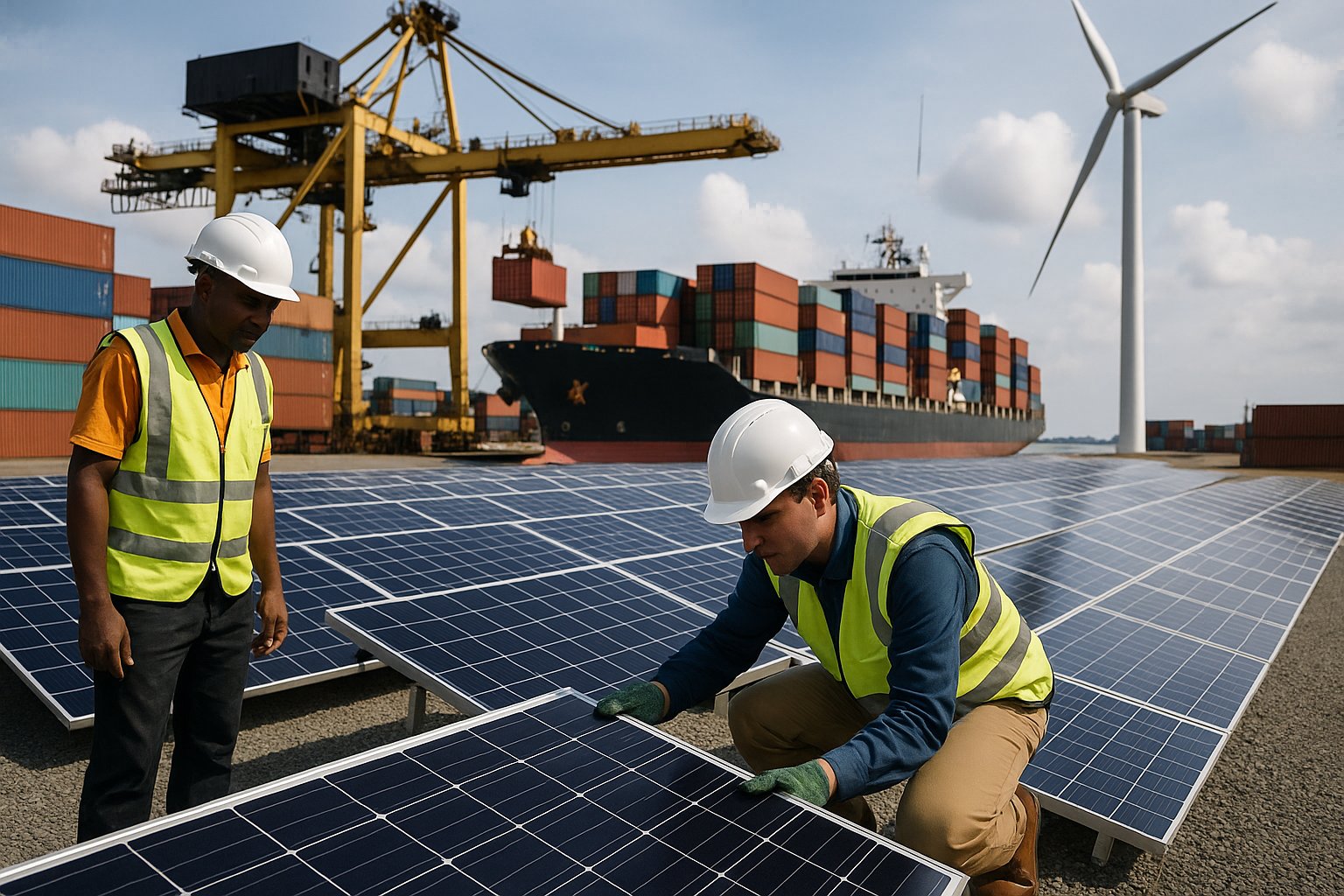
Port infrastructure is undergoing green transformation. Modern ports are installing shore power facilities allowing ships to turn off diesel generators while docked, implementing electric cargo-handling equipment, and integrating renewable energy generation. Leading ports aim for zero-emission operations within the next two decades.
Last-Mile Innovation and Urban Logistics
The final delivery stage—last-mile logistics—presents unique sustainability challenges, particularly in urban environments. Electric delivery vehicles, cargo bicycles, and drone delivery systems are reducing emissions in city centers. Consolidation centers on urban peripheries enable efficient batching of deliveries, reducing vehicle trips and congestion while improving delivery success rates.
Digital Technologies Enabling Sustainable Trade 💻
Digital transformation is revolutionizing how global trade operates, creating opportunities for enhanced sustainability and resilience. Digital trade facilitation reduces paperwork, speeds customs clearance, and minimizes errors that cause delays and waste. Electronic documentation systems eliminate millions of paper documents annually while improving transparency and traceability.
Internet of Things sensors provide real-time visibility throughout supply chains. Temperature monitors ensure cold chain integrity for perishable goods, reducing food waste. Location trackers optimize routing, avoiding congestion and reducing fuel consumption. Condition sensors detect damage early, preventing unnecessary transportation of compromised goods.
Digital platforms are connecting small and medium enterprises to global markets with unprecedented efficiency. These platforms reduce transaction costs, provide access to logistics services, and offer tools for measuring and managing environmental footprints. By democratizing global trade access, digital technologies enable smaller businesses to participate in sustainable commerce.
Circular Economy Principles in International Commerce ♻️
Linear economic models based on “take-make-dispose” are giving way to circular approaches that maximize resource utilization and minimize waste. In trade contexts, circularity means designing products for longevity, repairability, and recyclability while establishing reverse logistics systems that recover materials for reuse.
Extended producer responsibility policies require manufacturers to manage products throughout their entire lifecycle, including end-of-life disposal. This accountability drives design innovations that facilitate disassembly and material recovery. International coordination ensures these systems function across borders, preventing waste dumping in countries with weaker environmental governance.
Secondary materials markets are growing rapidly as recycled inputs substitute for virgin resources. International trade in recyclable materials—metals, plastics, paper, and electronics—is substantial, though it requires careful governance to prevent environmental harm. Quality standards and traceability systems ensure that “waste” exports genuinely contribute to circular economy objectives rather than transferring pollution.
Financial Instruments Supporting Climate-Resilient Trade 💰
Financial institutions increasingly integrate climate considerations into trade finance. Green trade finance products offer preferential terms for transactions involving sustainable goods or practices. Banks are developing tools to assess the climate risks within trade portfolios, ensuring lending decisions account for environmental vulnerabilities.
Climate risk insurance products help businesses manage weather-related disruptions. Parametric insurance provides rapid payouts triggered by specific climate events—hurricanes reaching certain intensities, rainfall below drought thresholds, or temperatures exceeding heat stress levels. These instruments enable businesses to recover quickly from climate shocks, maintaining supply chain continuity.
Development finance institutions are channeling capital toward climate adaptation infrastructure in vulnerable economies. Investments in climate-resilient ports, drought-resistant agricultural systems, and renewable energy infrastructure strengthen these nations’ capacity to participate reliably in global trade despite climate pressures.
Building Collaborative Governance Systems 🤝
Climate resilience in global trade requires unprecedented cooperation among governments, businesses, civil society, and international organizations. No single actor can address these challenges alone. Multi-stakeholder initiatives are emerging to develop standards, share best practices, and coordinate investments in sustainable trade infrastructure.
International organizations play convening roles, facilitating dialogue and building consensus around climate-trade approaches. The World Trade Organization, United Nations Environment Programme, and regional trade bodies are developing frameworks that harmonize environmental standards while respecting diverse national circumstances and development priorities.
Business coalitions demonstrate that sustainability and profitability can align. Industry initiatives like the Science Based Targets Network enable companies to set emissions reduction goals consistent with climate science. Collaborative logistics platforms allow competitors to share transportation capacity, reducing empty vehicle movements and overall emissions.
Capacity Building in Developing Economies
Ensuring equitable participation in sustainable global trade requires substantial capacity building in developing nations. Technical assistance programs help these countries implement environmental standards, access green finance, and adapt infrastructure to climate realities. Technology transfer mechanisms accelerate adoption of clean production methods and renewable energy systems.
Measuring Progress: Metrics and Accountability Frameworks 📊
Effective climate action requires robust measurement systems. Trade-related emissions accounting has advanced significantly, with methodologies for calculating supply chain footprints becoming more sophisticated and standardized. These tools enable businesses and governments to track progress, identify improvement opportunities, and verify sustainability claims.
Disclosure frameworks are evolving to require climate risk reporting. Investors, regulators, and consumers demand transparency about environmental performance and climate vulnerabilities. Standardized reporting following frameworks like the Task Force on Climate-related Financial Disclosures helps stakeholders make informed decisions about which companies and countries to engage with commercially.
Third-party verification ensures accountability. Independent auditors assess whether reported environmental performance reflects reality, building trust in sustainability claims and preventing greenwashing. Blockchain and other digital technologies enhance verification by creating tamper-proof records of supply chain activities and environmental impacts.
Looking Forward: Trade Systems Fit for Future Generations 🌱
The transformation toward climate-resilient global trade systems is not merely responding to environmental pressures—it represents an opportunity to build more equitable, efficient, and prosperous commerce. Sustainable trade can drive innovation, create quality employment, and strengthen global cooperation while protecting planetary boundaries.
Success requires sustained commitment across all sectors and geographies. Governments must implement coherent policies that price environmental costs accurately while supporting vulnerable workers and communities through transitions. Businesses must invest in sustainable technologies and practices even when short-term returns seem uncertain. Financial institutions must redirect capital toward climate solutions at unprecedented scale.
The timeline is urgent but achievable. The next decade represents a critical window for embedding climate resilience deeply into trade systems. Investments made now in infrastructure, technology, and governance will determine whether global commerce becomes part of the climate solution or remains dangerously exposed to accelerating environmental changes.
Individual actions matter collectively. Consumers choosing sustainable products, investors prioritizing environmental performance, and citizens demanding climate-conscious trade policies all contribute to systemic transformation. Building a sustainable future through enhanced climate resilience in global trade is not just an economic or environmental imperative—it is a moral obligation to current and future generations who depend on both thriving commerce and a livable planet.