
Managing warehouse inventory has never been easier. Drones are transforming how businesses track stock, reducing manual labor while boosting accuracy and efficiency across operations.

🚁 The Dawn of Aerial Inventory Intelligence
Warehouse management has long been plagued by inefficiencies, human error, and time-consuming manual processes. Traditional inventory verification methods require workers to physically scan barcodes, count items, and navigate through towering shelves with handheld devices or lift equipment. This approach not only consumes valuable time but also poses safety risks and increases operational costs significantly.
Enter drone technology—a game-changing innovation that’s reshaping how companies approach stock verification. These autonomous flying systems equipped with advanced sensors, cameras, and artificial intelligence are revolutionizing inventory management by offering unprecedented speed, accuracy, and cost-effectiveness. What once took days can now be accomplished in hours, and what required dozens of workers can be handled by a single drone operator.
The integration of drones into inventory management represents more than just technological advancement; it’s a fundamental shift in how businesses conceptualize warehouse operations. Companies across various industries—from retail giants to manufacturing facilities—are discovering that drone-powered inventory systems deliver measurable returns on investment while simultaneously improving workplace safety and employee satisfaction.
Why Traditional Inventory Methods Are Becoming Obsolete
The limitations of conventional inventory management have become increasingly apparent in our fast-paced business environment. Manual stock verification processes are inherently prone to human error, with studies showing accuracy rates often falling below 65% in large warehouse operations. Workers experiencing fatigue, distraction, or simply making honest mistakes contribute to discrepancies that cascade through supply chains, resulting in stockouts, overstocking, and financial losses.
Time consumption represents another critical challenge. A typical warehouse inventory cycle might require shutting down operations for several days, directly impacting revenue and customer satisfaction. The labor costs associated with these extended verification periods add substantial overhead, while the opportunity cost of halted operations compounds the financial burden.
Safety concerns further complicate traditional approaches. Workers operating at height on lifts or ladders face injury risks, and navigating congested warehouse aisles with heavy equipment presents constant hazards. Insurance costs, workers’ compensation claims, and the human toll of workplace accidents make safety considerations paramount in any operational assessment.
📊 How Drone Technology Transforms Stock Verification
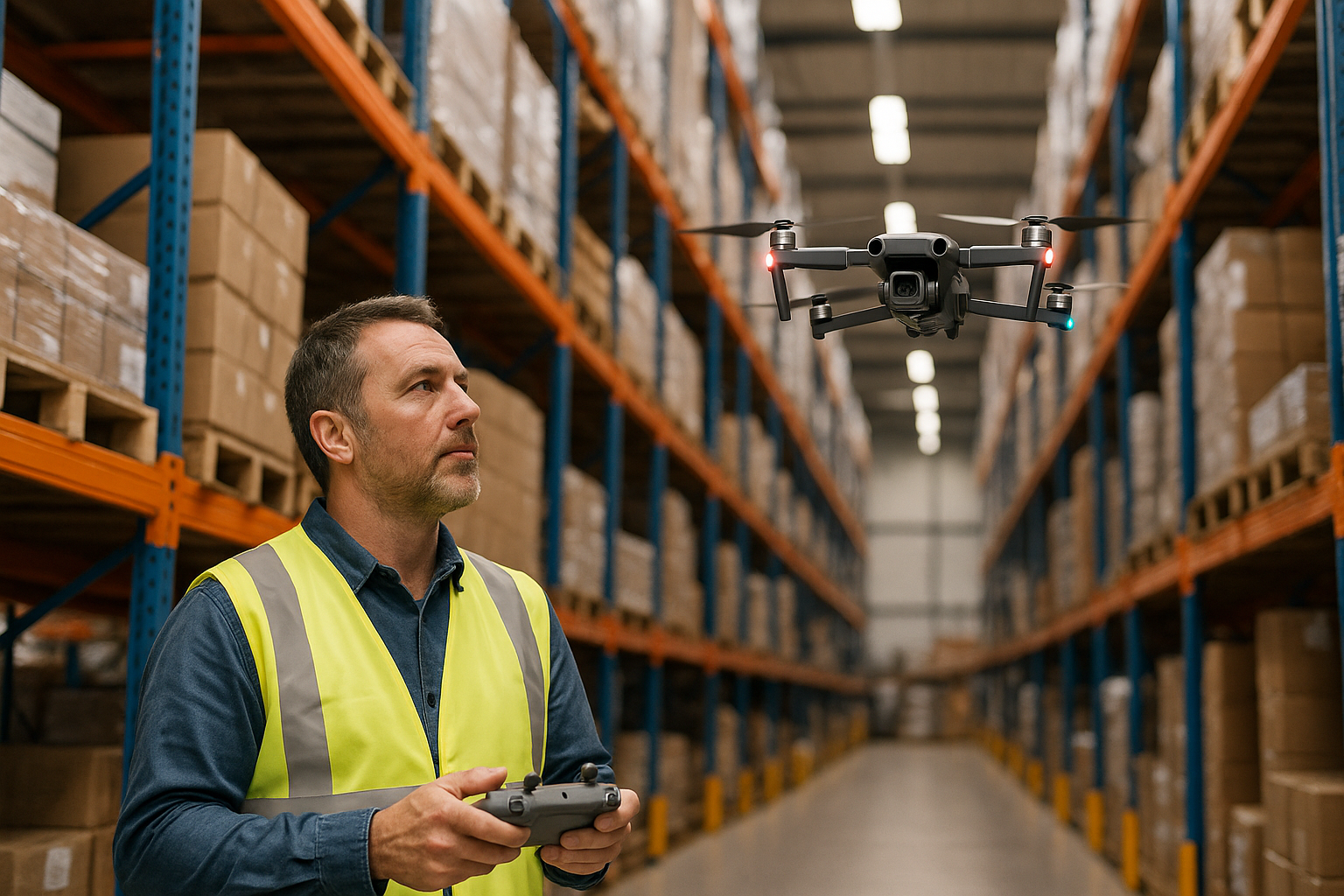
Modern inventory drones employ sophisticated sensor arrays that include high-resolution cameras, RFID readers, barcode scanners, and LiDAR technology. These systems work in concert to capture comprehensive data about warehouse contents with remarkable precision. As drones navigate predetermined flight paths, they automatically identify, count, and verify stock locations without human intervention.
The autonomous navigation capabilities of inventory drones deserve special attention. Utilizing GPS, visual positioning systems, and obstacle avoidance sensors, these devices can safely maneuver through complex warehouse environments, even in facilities with dynamic layouts or challenging conditions. Advanced models can operate in low-light environments, narrow aisles, and at various heights, accessing inventory locations that would be difficult or dangerous for human workers.
Data processing represents where drone systems truly excel. Real-time information captured during flights is immediately transmitted to inventory management software, where artificial intelligence algorithms analyze discrepancies, identify trends, and generate actionable insights. This instantaneous data availability enables managers to make informed decisions quickly, addressing issues before they escalate into costly problems.
Integration with Existing Systems
One of the most compelling aspects of drone inventory solutions is their compatibility with existing warehouse management systems (WMS). Modern drone platforms are designed to seamlessly integrate with popular enterprise resource planning (ERP) software, ensuring that data flows smoothly across organizational systems without requiring complete infrastructure overhauls.
The integration process typically involves API connections that allow drones to receive inventory assignments from the WMS and transmit verification results back in standardized formats. This bidirectional communication ensures that inventory records remain synchronized across all platforms, eliminating the data silos that plague many organizations.
✨ Tangible Benefits That Impact Your Bottom Line
The financial case for implementing drone-based inventory management is compelling when examining both immediate and long-term returns. Organizations report inventory accuracy improvements from 65-75% to 95-99%, directly translating to reduced shrinkage, better demand forecasting, and optimized stock levels. These accuracy gains alone can justify implementation costs within the first year of operation.
Labor cost reduction represents another significant advantage. Tasks that previously required teams of workers can now be accomplished by a single drone operator, freeing employees to focus on higher-value activities like customer service, strategic planning, or process improvement initiatives. The labor savings compound over time, with some organizations reporting 75% reductions in inventory verification labor costs.
Operational efficiency improvements extend beyond simple time savings. Continuous inventory verification becomes feasible with drones, allowing businesses to maintain real-time stock visibility rather than relying on periodic counts. This ongoing visibility enables just-in-time inventory strategies, reduces carrying costs, and minimizes the capital tied up in excess stock.
Safety Improvements and Risk Reduction
The safety benefits of drone implementation cannot be overstated. By eliminating the need for workers to operate at height or navigate congested warehouse spaces with heavy equipment, organizations dramatically reduce workplace accident risks. This risk reduction translates to lower insurance premiums, fewer workers’ compensation claims, and improved employee morale.
Beyond physical safety, drones also reduce operational risks associated with inventory inaccuracies. Stockouts that disappoint customers or excess inventory that ties up capital both represent business risks that accurate, timely inventory data helps mitigate effectively.
🔍 Choosing the Right Drone Solution for Your Facility
Selecting appropriate drone technology requires careful evaluation of your specific operational requirements. Warehouse size, ceiling height, aisle configuration, inventory types, and existing technology infrastructure all influence which drone solutions will deliver optimal results. Small facilities with straightforward layouts may benefit from entry-level systems, while large distribution centers with complex configurations might require enterprise-grade solutions with advanced autonomous capabilities.
Battery life and flight time considerations are crucial for practical implementation. Most commercial inventory drones offer 20-45 minutes of flight time per charge, though this varies based on payload, environmental conditions, and operational speed. Facilities requiring extended coverage may need multiple drones or automated charging stations that enable continuous operations.
The payload capacity and sensor configuration directly impact what inventory tasks the drone can accomplish. Systems designed primarily for visual verification might carry lightweight camera arrays, while those intended for RFID scanning require more robust payloads to accommodate reader hardware. Understanding your verification requirements helps ensure you select appropriately equipped systems.
Indoor vs. Outdoor Capabilities
Most inventory drones are specifically designed for indoor warehouse environments, featuring precision navigation systems optimized for GPS-denied spaces. These systems rely on visual positioning, ultrasonic sensors, and LiDAR to maintain accurate positioning within buildings. However, some organizations with outdoor storage yards or mixed indoor-outdoor facilities may require drones capable of operating effectively in both environments.
Implementation Strategy: From Planning to Operations
Successful drone implementation begins with comprehensive assessment of your current inventory processes. Document existing workflows, identify pain points, establish baseline metrics for accuracy and efficiency, and define clear objectives for what drone technology should accomplish. This foundational work ensures that implementation efforts align with business priorities and deliver measurable value.
Pilot programs offer valuable opportunities to validate drone technology in your specific environment before full-scale deployment. Starting with a defined warehouse section or product category allows teams to refine operational procedures, identify integration challenges, and demonstrate value to stakeholders with minimal risk and investment.
Training represents a critical success factor that organizations sometimes underestimate. While modern inventory drones feature user-friendly interfaces, operators still require training on flight procedures, safety protocols, data interpretation, and troubleshooting. Comprehensive training programs ensure that teams can maximize system capabilities while maintaining safety standards.
Regulatory Considerations and Compliance
Operating drones indoors for commercial purposes generally involves fewer regulatory hurdles than outdoor operations, but compliance requirements still exist. Understanding local regulations, obtaining necessary permits, and implementing safety protocols that meet or exceed regulatory standards protects organizations from legal complications while demonstrating commitment to responsible technology deployment.
Privacy considerations also merit attention, particularly in facilities where drones might capture images of personnel or sensitive information. Establishing clear policies about data handling, image retention, and privacy protection builds trust with employees and ensures compliance with data protection regulations.
💡 Advanced Applications Beyond Basic Counting
While inventory verification represents the primary application, drone technology offers numerous additional capabilities that forward-thinking organizations are beginning to explore. Warehouse layout optimization becomes possible when drones capture comprehensive spatial data about product placement, traffic patterns, and space utilization, enabling managers to redesign layouts for maximum efficiency.
Quality control inspections can be conducted more frequently and thoroughly with drone-mounted cameras capable of detecting packaging damage, labeling errors, or storage condition issues. This proactive approach to quality management helps organizations identify and address problems before products reach customers.
Security monitoring represents another valuable application, with drones providing after-hours surveillance that complements traditional security systems. The ability to investigate alarms or suspicious activity without putting security personnel at risk adds an extra layer of protection for valuable inventory assets.
Predictive Analytics and AI Integration
The real power of drone-collected inventory data emerges when combined with artificial intelligence and machine learning algorithms. These systems can identify patterns in inventory movement, predict future demand with greater accuracy, optimize reorder points, and even detect potential theft or fraud by identifying anomalous patterns in stock levels.
Computer vision algorithms analyzing drone imagery can automatically detect misplaced items, identify products stored in incorrect locations, and flag potential safety hazards like damaged racking or spilled materials. These capabilities transform drones from simple data collection tools into intelligent systems that actively contribute to operational excellence.
🎯 Real-World Success Stories Driving Adoption
Major retailers have reported remarkable results from drone implementation. One global retail chain reduced annual inventory verification time from 30 days to just 3 days across their distribution network, while simultaneously improving accuracy from 70% to 98%. The labor savings alone exceeded $2 million annually, while improved inventory accuracy reduced stockouts by 40% and increased customer satisfaction scores significantly.
Manufacturing facilities have discovered that continuous drone monitoring enables just-in-time delivery of components to production lines, reducing work-in-process inventory by 35% while ensuring materials availability never interrupts manufacturing schedules. This optimization freed substantial working capital for other strategic investments while improving production efficiency.
Third-party logistics providers leveraging drone technology have gained competitive advantages by offering clients more accurate, frequent inventory reporting with faster turnaround times. This enhanced service delivery has enabled some providers to command premium pricing while simultaneously reducing their own operational costs.
Overcoming Implementation Challenges
Despite compelling benefits, drone adoption does present challenges that organizations must address thoughtfully. Initial investment costs can seem substantial, particularly for small to medium-sized operations. However, conducting thorough cost-benefit analyses typically reveals payback periods of 12-24 months, making the investment financially justified for most organizations with significant inventory holdings.
Change management represents another common challenge, as employees may feel threatened by automation or uncertain about how drone implementation affects their roles. Transparent communication about how technology augments rather than replaces human workers, combined with retraining opportunities for new roles, helps ease transitions and build organizational buy-in.
Technical integration challenges can arise when connecting drone systems with legacy warehouse management software. Working with experienced implementation partners who understand both drone technology and enterprise systems architecture helps organizations navigate these technical complexities successfully.
🚀 The Future of Drone-Powered Inventory Management
The trajectory of drone technology suggests even more exciting capabilities on the horizon. Swarm intelligence allowing multiple drones to coordinate activities autonomously promises to dramatically reduce inventory cycle times in large facilities. Imagine fleets of drones working in perfect synchronization, covering entire distribution centers in minutes rather than hours.
Advanced AI integration will enable drones to not just collect inventory data but make intelligent decisions about inventory management. Future systems might automatically trigger reorder processes, identify optimization opportunities, or even coordinate with robotic picking systems to prepare orders based on demand predictions.
Energy efficiency improvements through better battery technology and potentially alternative power sources like tethered systems will enable longer flight times and more comprehensive coverage. Some researchers are even exploring energy harvesting technologies that could enable near-perpetual operations with minimal charging interruptions.
Expanding Applications Across Industries
While warehousing represents the current primary application, drone inventory technology is beginning to expand into other sectors. Retail stores are experimenting with drones for after-hours inventory verification, construction companies are using them to track materials across job sites, and pharmaceutical companies are leveraging them for controlled substance verification in compliance with strict regulatory requirements.
The versatility of drone platforms means that new applications will continue emerging as organizations discover creative ways to apply aerial intelligence to their unique operational challenges.
Making the Strategic Decision to Implement
Deciding whether to implement drone-based inventory management requires honest assessment of your organization’s readiness and needs. Consider your current inventory accuracy levels, the frequency of discrepancies, labor costs associated with verification, and the business impact of inventory errors. Organizations experiencing significant challenges in these areas typically find drone implementation delivers rapid, measurable returns.
Evaluate your warehouse infrastructure to ensure compatibility with drone operations. Adequate ceiling height, clear flight paths, and appropriate lighting all contribute to successful implementation. Most modern warehouses already meet these requirements, but facilities with unusual configurations may need modifications.
Consider starting with a focused implementation targeting specific pain points rather than attempting to revolutionize all inventory processes simultaneously. This phased approach reduces risk, enables learning, and builds organizational confidence before expanding to additional applications.
The competitive landscape in your industry should also inform decision-making. As more organizations adopt drone technology, those maintaining traditional approaches risk falling behind in operational efficiency, accuracy, and ultimately customer service quality. Early adoption can provide competitive advantages that compound over time.
📈 Measuring Success and Continuous Improvement
Establishing clear metrics before implementation enables objective assessment of drone technology’s impact on your operations. Track inventory accuracy rates, cycle count duration, labor hours required, safety incidents, and customer satisfaction scores related to inventory availability. These baseline measurements provide benchmarks against which to evaluate improvement.
Regular performance reviews should examine not just whether targets are being met but also identify opportunities for optimization. Analyze flight path efficiency, data quality, integration effectiveness, and operator productivity to continuously refine operations and maximize value from your drone investment.
Gathering feedback from warehouse staff, managers, and other stakeholders provides qualitative insights that complement quantitative metrics. Understanding how drone implementation affects daily workflows, employee satisfaction, and operational culture helps organizations address concerns and amplify positive impacts.
The inventory management landscape is evolving rapidly, with drone technology leading a transformation toward more efficient, accurate, and intelligent operations. Organizations that embrace this innovation position themselves to compete more effectively while delivering superior service to customers. The question is no longer whether drones will become standard in warehouse operations, but rather how quickly forward-thinking organizations will capture the advantages this technology offers. By streamlining stock verification effortlessly, drones free your team to focus on strategic activities that drive growth and innovation, transforming inventory management from a necessary cost center into a competitive advantage that propels your business forward.