The logistics landscape is undergoing a dramatic transformation as micro-fulfillment centers emerge as game-changers, bringing warehouse capabilities closer to consumers than ever before.

🚀 The Dawn of Hyper-Local Fulfillment
Traditional warehouse models are struggling to keep pace with modern consumer expectations. As e-commerce continues its explosive growth and same-day delivery becomes the standard rather than the exception, businesses are discovering that massive distribution centers located on city outskirts simply cannot deliver the speed and efficiency demanded by today’s customers.
Micro-fulfillment centers (MFCs) represent a revolutionary approach to this challenge. These compact, highly automated facilities typically occupy between 3,000 and 10,000 square feet—a fraction of conventional warehouse space—yet they pack remarkable operational capabilities within their walls. By positioning these facilities within urban areas, businesses can dramatically reduce last-mile delivery costs while simultaneously accelerating order fulfillment times.
The concept isn’t entirely new, but recent technological advances in robotics, artificial intelligence, and inventory management systems have transformed MFCs from theoretical models into practical, scalable solutions that are reshaping how products move from shelves to doorsteps.
Understanding the Micro-Fulfillment Architecture
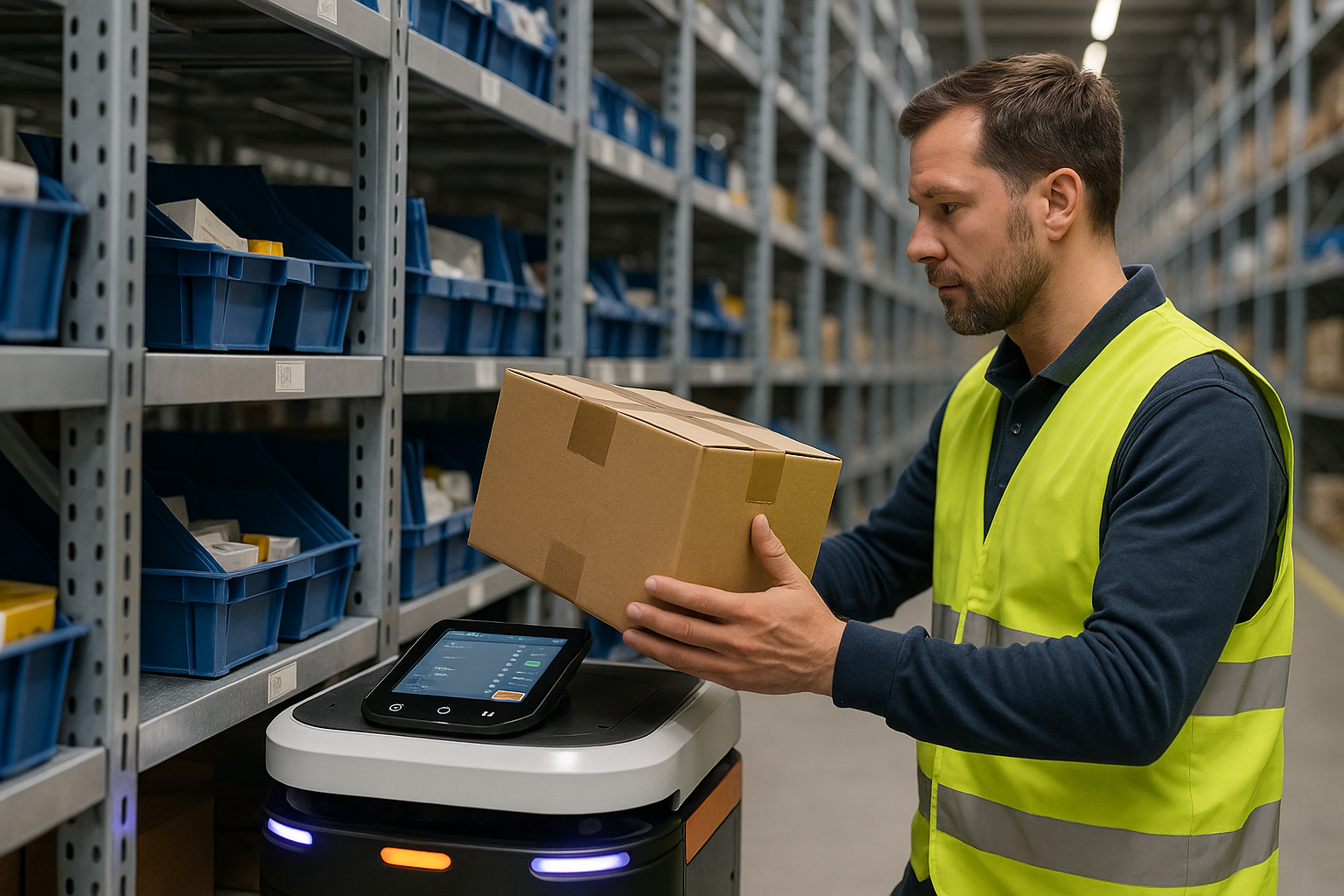
What sets micro-fulfillment centers apart from traditional warehouses goes far beyond their compact footprint. These facilities leverage cutting-edge automation technologies to maximize efficiency within limited space. Automated storage and retrieval systems (AS/RS), robotic picking arms, and sophisticated conveyor networks work in concert to process orders with remarkable speed and accuracy.
The typical MFC operates with minimal human intervention for routine tasks. Robots navigate narrow aisles retrieving products, while AI-powered systems optimize inventory placement based on demand patterns. This automation not only accelerates order processing but also dramatically reduces error rates—a critical factor in maintaining customer satisfaction and minimizing costly returns.
Most importantly, MFCs are designed for modularity and flexibility. Unlike traditional warehouses that require massive capital investments and years of planning, micro-fulfillment centers can be established relatively quickly in existing retail spaces, parking structures, or purpose-built urban facilities. This adaptability enables businesses to scale their fulfillment networks incrementally, responding to demand fluctuations without overcommitting resources.
The Technology Stack Powering Modern MFCs
Behind every successful micro-fulfillment operation lies a sophisticated technology infrastructure. Warehouse management systems (WMS) specifically designed for MFC environments coordinate every aspect of operations, from inventory tracking to order routing. These systems integrate with e-commerce platforms, point-of-sale systems, and transportation management software to create seamless information flows.
Computer vision technology enables robots to identify and handle products with increasing dexterity, while machine learning algorithms continuously refine operational parameters. Predictive analytics forecast demand patterns, ensuring that high-velocity items are strategically positioned for rapid access. Together, these technologies create an ecosystem where efficiency improves continuously through automated learning.
💡 Scalability: The Ultimate Competitive Advantage
The true power of micro-fulfillment centers lies in their inherent scalability. Traditional logistics expansion follows a lumpy growth pattern—businesses must commit to large distribution centers well before demand justifies the investment, creating periods of underutilization followed by capacity constraints. This capital-intensive approach creates significant financial risk and operational inflexibility.
MFCs flip this model entirely. Companies can deploy multiple small facilities strategically across markets, growing their fulfillment network organically as demand develops. If a particular location underperforms, the relatively modest investment can be repurposed or relocated with far less financial impact than abandoning a massive warehouse.
This granular scalability extends beyond simple capacity expansion. Businesses can customize each MFC to serve specific market characteristics—a facility in a dense urban core might focus on rapid grocery delivery, while a suburban location emphasizes general merchandise with longer delivery windows. This localization strategy enables companies to optimize operations for specific customer segments and geographic nuances.
Network Effects and Geographic Coverage
As businesses deploy multiple micro-fulfillment centers, they create powerful network effects. Each additional facility reduces average delivery distances, accelerating fulfillment times while lowering transportation costs. This dense network architecture also provides redundancy—if one facility experiences disruption, nearby MFCs can absorb demand with minimal service impact.
Geographic coverage becomes more comprehensive and equitable. Rather than serving only major metropolitan areas economically, MFC networks can extend fast, affordable delivery to smaller cities and suburban communities. This democratization of logistics capabilities creates competitive advantages for retailers who can promise consistent service quality across diverse markets.
Transforming the Economics of Last-Mile Delivery
Last-mile delivery represents the most expensive and complex segment of the logistics chain, often accounting for 50% or more of total fulfillment costs. Micro-fulfillment centers directly address this challenge by minimizing the distance products must travel to reach customers. When facilities are positioned within urban neighborhoods rather than distant industrial parks, delivery routes become shorter, more efficient, and significantly less expensive.
The economic benefits extend beyond simple distance reduction. Shorter routes enable delivery vehicles to complete more stops per shift, improving asset utilization and driver productivity. Reduced fuel consumption lowers environmental impact while cutting operational expenses. Faster delivery times decrease the likelihood of failed deliveries due to customer unavailability, further improving efficiency.
Perhaps most significantly, proximity enables businesses to leverage diverse delivery methods economically. Walking and bicycle couriers become viable options for ultra-local deliveries, dramatically reducing costs compared to traditional vehicle-based transportation. Some MFCs even facilitate customer pickup options, eliminating delivery costs entirely while providing convenience for shoppers who prefer immediate gratification.
Labor Dynamics in the Micro-Fulfillment Era
The labor implications of micro-fulfillment centers are nuanced and multifaceted. While automation reduces the need for traditional warehouse workers performing manual picking and packing, MFCs create new employment categories. Facilities require technical staff to maintain robotic systems, data analysts to optimize operations, and customer service representatives to handle exceptions and special requests.
Urban locations also change the labor equation. Rather than requiring workers to commute to remote industrial areas, MFCs bring jobs into residential communities. This accessibility can improve recruitment and retention while supporting local economies. The work itself often involves less physical strain than traditional warehouse roles, potentially expanding the pool of available workers.
🏪 Retail Integration and Omnichannel Excellence
For retailers, micro-fulfillment centers represent the ultimate omnichannel enabler. By embedding MFCs within or adjacent to existing stores, businesses can use the same inventory to serve both in-store shoppers and online orders. This unified inventory approach prevents the frustrating scenario where items show as available online but are out of stock in stores, or vice versa.
The operational synergies run deeper than inventory sharing. Store associates can focus on customer service and merchandising rather than picking online orders, while automated systems handle fulfillment tasks more efficiently. During peak periods, the MFC can process overflow demand without disrupting the shopping experience or requiring stores to dedicate excessive floor space to fulfillment operations.
This integration also enables sophisticated services like buy-online-pickup-in-store (BOPIS) with remarkable speed. Orders can be ready for pickup within hours or even minutes, providing convenience that pure-play e-commerce competitors struggle to match. The ability to offer flexible fulfillment options—delivery, pickup, or even ship-to-store from other locations—gives retailers powerful tools to meet diverse customer preferences.
Fresh Food and Grocery: The Perfect MFC Application
Nowhere are micro-fulfillment centers making a bigger impact than in grocery and fresh food logistics. Perishable products demand cold storage, rapid turnover, and careful handling—requirements that MFCs address exceptionally well. Automated systems can maintain precise temperature controls while processing orders quickly to ensure product freshness.
The proximity advantages are particularly pronounced for groceries. Consumers expect fresh food delivery within tight time windows, often requiring same-day or even one-hour fulfillment. Traditional centralized warehouses simply cannot meet these expectations economically. MFCs positioned throughout urban markets make rapid grocery delivery not just possible but profitable.
Several major grocery chains and specialized food delivery services have already deployed extensive MFC networks, reporting significant improvements in operational efficiency and customer satisfaction. The model has proven so successful that it’s expanding beyond groceries into meal kits, prepared foods, and specialty products requiring careful temperature management.
⚡ Overcoming Implementation Challenges
Despite their compelling advantages, micro-fulfillment centers present meaningful implementation challenges. Real estate acquisition in desirable urban locations can be expensive and complicated. Zoning regulations may restrict warehouse operations in residential or mixed-use areas. Building out the necessary infrastructure—power, internet connectivity, loading docks—requires careful planning and significant investment.
Technology integration represents another hurdle. Successfully deploying MFC automation requires seamless connections between warehouse management systems, robotics platforms, inventory databases, and customer-facing applications. These integrations are complex, and implementation often uncovers unexpected compatibility issues or data quality problems that must be resolved before operations can run smoothly.
Perhaps the most significant challenge is change management. Shifting from traditional fulfillment models to micro-fulfillment networks requires organizational restructuring, new skill development, and cultural adaptation. Employees accustomed to conventional warehouse operations must learn to work alongside automated systems, while management teams need new analytical capabilities to optimize distributed fulfillment networks.
Navigating the Automation Investment Decision
The capital requirements for micro-fulfillment automation vary widely depending on technology choices and facility size. Basic MFC setups might cost several hundred thousand dollars, while sophisticated installations with advanced robotics can exceed several million. This investment must be weighed against the operational savings and competitive advantages MFCs provide.
Many businesses adopt phased approaches, starting with semi-automated facilities that blend human workers with basic automation, then progressively increasing automation levels as they gain experience and order volumes grow. This staged investment strategy reduces upfront capital requirements while providing valuable learning opportunities before committing to full automation.
🌍 Environmental Sustainability and Urban Logistics
Micro-fulfillment centers contribute meaningfully to sustainability goals that increasingly matter to both consumers and regulators. Shorter delivery routes directly translate to reduced vehicle emissions and lower carbon footprints. The ability to use smaller delivery vehicles, bicycles, or even walking couriers further minimizes environmental impact.
Energy efficiency represents another sustainability dimension. Modern MFCs incorporate LED lighting, efficient HVAC systems, and renewable energy sources where feasible. The smaller footprint compared to traditional warehouses means less overall energy consumption, while automation enables precise climate control that eliminates the waste associated with maintaining comfortable temperatures throughout massive warehouse spaces.
Urban logistics also addresses the hidden environmental costs of sprawling distribution networks. By bringing fulfillment facilities into cities rather than forcing products to travel from distant suburbs, MFCs reduce the total miles products travel throughout the supply chain. This consolidation creates meaningful sustainability improvements that accumulate across thousands of daily deliveries.
The Competitive Landscape and Market Evolution
As micro-fulfillment centers prove their value, competition in the MFC technology and services sector is intensifying. Established warehouse automation companies are developing MFC-specific solutions, while specialized startups focus exclusively on micro-fulfillment technologies. This competitive pressure is accelerating innovation and driving down costs, making MFCs accessible to a broader range of businesses.
Retailers, third-party logistics providers, and grocery chains are all investing aggressively in MFC networks. Some companies are building proprietary facilities, while others are partnering with specialized operators who manage MFCs as a service. This diversity of approaches is creating a dynamic market ecosystem with multiple viable paths to implementation.
The competitive dynamics are also reshaping consumer expectations. As more businesses offer same-day or even one-hour delivery enabled by MFC networks, these capabilities transition from differentiators to baseline requirements. Companies without comparable fulfillment capabilities increasingly find themselves at a disadvantage, creating powerful incentives for rapid MFC adoption across industries.
🔮 Future Trajectories and Emerging Innovations
The evolution of micro-fulfillment centers shows no signs of slowing. Emerging technologies promise to enhance MFC capabilities further. Autonomous delivery vehicles and drones could leverage MFC networks as strategic launch points, extending rapid delivery ranges while minimizing human labor requirements. Advanced robotics with improved dexterity will expand the range of products MFCs can handle efficiently.
Artificial intelligence capabilities are becoming increasingly sophisticated, enabling more precise demand forecasting and inventory optimization. Future MFC systems might predict customer orders before they’re placed, pre-positioning products for instantaneous fulfillment. Machine learning algorithms will continuously refine operational parameters, creating facilities that become progressively more efficient over time.
The concept of vertical MFCs—multi-story facilities in dense urban cores—represents an intriguing frontier. These installations could maximize valuable urban real estate while providing even closer proximity to customers. Some visionary planners envision mixed-use developments incorporating MFCs alongside residential and commercial spaces, creating truly integrated urban logistics ecosystems.
Building Your Micro-Fulfillment Strategy
For businesses considering micro-fulfillment implementation, strategic planning is essential. Start by analyzing your order volume, product characteristics, and geographic customer distribution. MFCs deliver maximum value for businesses with substantial order volumes in defined geographic areas, particularly those handling standardized products that automation can process efficiently.
Conduct thorough market analysis to identify optimal facility locations. Consider population density, competitive presence, real estate costs, and existing delivery infrastructure. The right locations balance accessibility to customers with practical considerations like lease costs and operational flexibility.
Technology selection requires careful evaluation. Assess different automation providers based on system capabilities, scalability, integration requirements, and total cost of ownership. Request demonstrations, speak with existing customers, and ensure that proposed systems align with your specific operational needs and growth plans.
Finally, develop a comprehensive implementation roadmap. Account for site preparation, technology installation, employee training, and gradual volume ramp-up. Build contingency plans for potential challenges, and establish clear metrics to evaluate performance against expectations. Success in micro-fulfillment requires patience, flexibility, and commitment to continuous improvement.
Embracing the Logistics Revolution ✨
Micro-fulfillment centers represent far more than incremental logistics improvements—they constitute a fundamental reimagining of how products reach consumers in an increasingly digital, urban world. By combining compact footprints, advanced automation, and strategic positioning, MFCs deliver scalability that traditional distribution models simply cannot match.
The businesses thriving in tomorrow’s competitive landscape will be those that recognize MFCs not as optional enhancements but as essential infrastructure for meeting rising consumer expectations. Whether you’re a retailer fighting for market share, a logistics provider seeking competitive advantages, or an entrepreneur building the next innovative delivery service, micro-fulfillment capabilities will likely determine your success or limitation.
The revolution is already underway. The question isn’t whether micro-fulfillment centers will transform logistics—they already are. The question is whether your business will lead this transformation or struggle to catch up as competitors establish MFC networks that deliver unmatched speed, efficiency, and customer satisfaction.