
Warehouse operations are undergoing a dramatic transformation as voice-picking technology and wearable devices merge to create unprecedented efficiency gains in fulfillment centers worldwide.

🚀 The Dawn of Hands-Free Warehouse Revolution
The logistics industry faces mounting pressure to deliver faster, more accurate order fulfillment while controlling operational costs. Traditional paper-based picking methods and handheld scanners, once considered cutting-edge, now represent bottlenecks in modern supply chains. Voice-picking technology combined with wearable devices offers a solution that addresses these challenges head-on, transforming how warehouse workers interact with inventory management systems.
Voice-directed warehousing eliminates the need for workers to constantly look down at screens or paperwork, reducing errors and increasing productivity. When integrated with smart wearables like headsets, smart glasses, and ring scanners, this technology creates a seamless workflow that keeps workers’ hands and eyes free for the primary task: picking and moving products efficiently.
Understanding Voice-Picking Technology in Modern Fulfillment
Voice-picking systems operate through sophisticated speech recognition software that communicates picking instructions to workers through wireless headsets. The system tells workers where to go, what to pick, and how many units to select. Workers respond verbally to confirm actions, creating a continuous dialogue between human and machine that maintains accuracy while maximizing speed.
The technology relies on advanced natural language processing that can understand various accents, dialects, and speech patterns. Modern voice-picking platforms support multiple languages and can adapt to individual worker voice profiles, reducing miscommunication and improving system reliability across diverse workforces.
Core Components of Voice-Directed Warehousing
A complete voice-picking ecosystem consists of several interconnected elements working in harmony. The warehouse management system (WMS) serves as the brain, generating optimized picking routes and managing inventory data. Voice recognition middleware translates digital instructions into spoken commands and interprets worker responses back into system commands.
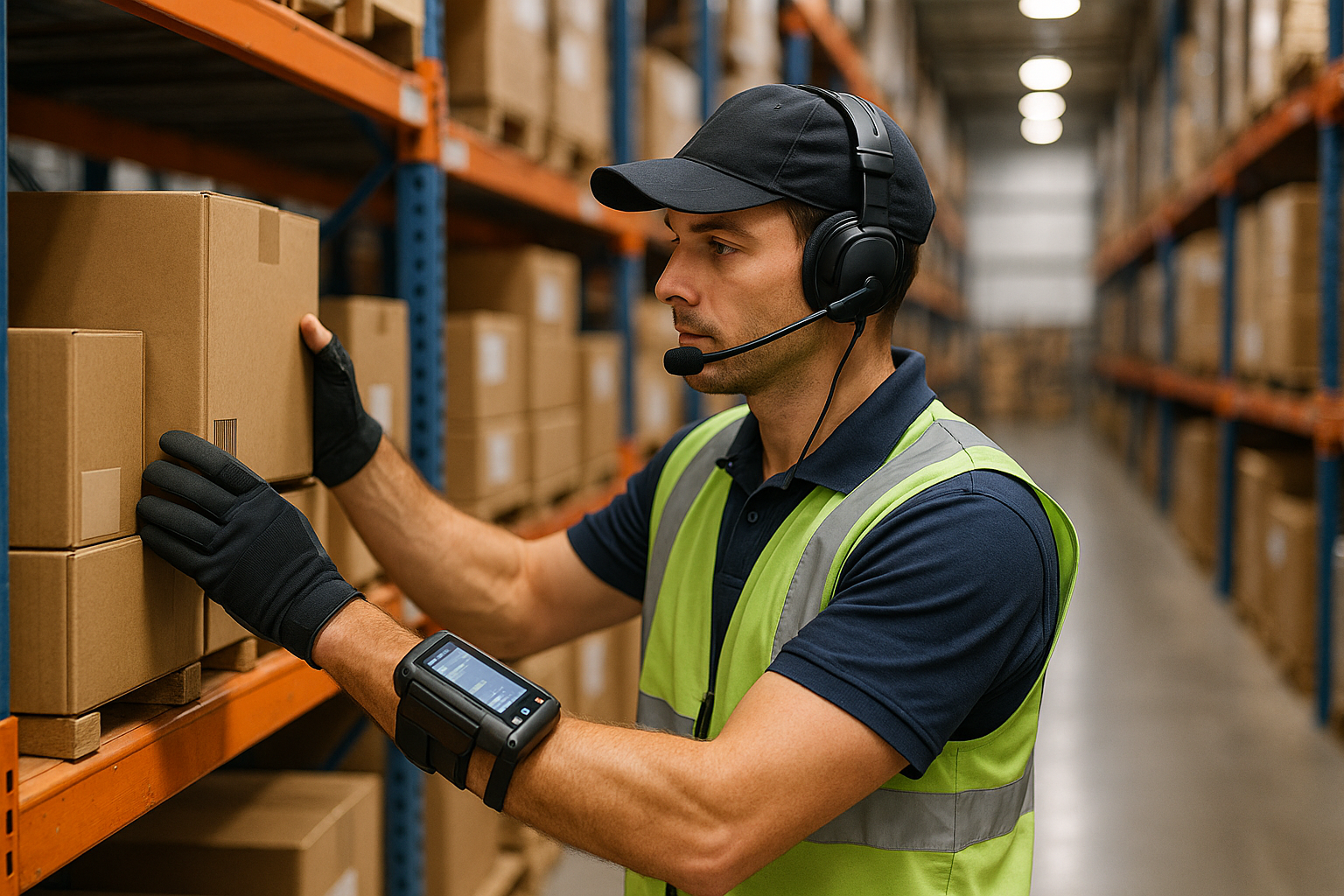
Workers wear lightweight headsets with noise-canceling microphones that filter out ambient warehouse sounds. These devices connect wirelessly to the central system, typically through Wi-Fi or Bluetooth networks designed for industrial environments. The audio quality must remain clear even in noisy warehouse conditions where forklifts, conveyor belts, and other machinery create constant background noise.
Wearable Technology: Beyond Simple Headsets 📱
While voice-enabled headsets form the foundation of voice-picking systems, contemporary wearable technology extends far beyond audio devices. Smart glasses equipped with augmented reality (AR) displays overlay digital information onto the physical warehouse environment, showing workers optimal paths, product locations, and real-time inventory updates without requiring them to look away from their tasks.
Ring scanners and finger-mounted barcode readers complement voice systems by enabling hands-free scanning. Workers can verify picks by scanning barcodes while carrying items, eliminating the need to set down products or reach for handheld scanners. This seemingly small innovation significantly reduces repetitive motions and cumulative picking time throughout a shift.
Smartwatches and Wrist-Mounted Displays
Ruggedized smartwatches designed for warehouse environments provide visual confirmation of voice instructions, serving as a backup communication channel when audio clarity becomes challenging. These devices display pick quantities, location codes, and order details while workers receive simultaneous voice instructions, creating redundancy that reduces errors.
Advanced models include haptic feedback that vibrates to alert workers about priority orders, system notifications, or safety alerts. This multi-sensory approach ensures critical information reaches workers even when visual or auditory channels become temporarily compromised by environmental factors.
Quantifiable Benefits Driving Adoption 📊
Organizations implementing voice-picking and wearable technology report measurable improvements across multiple operational metrics. Productivity typically increases by 15-35% as workers navigate warehouses more efficiently and spend less time interpreting instructions. The hands-free nature of the technology allows workers to move products continuously without stopping to consult paperwork or handheld devices.
Accuracy improvements often exceed expectations, with error rates dropping by 50-75% compared to paper-based systems. Voice confirmation creates an immediate verification loop that catches mistakes before they propagate through the fulfillment process. This accuracy enhancement directly reduces costly returns, customer service interventions, and re-picking operations.
Training Time Reduction and Workforce Flexibility
New workers become productive significantly faster with voice-directed systems. Training periods shrink from days or weeks to just hours because voice systems guide workers through each step with clear instructions. This rapid onboarding proves invaluable during peak seasons when warehouses need to quickly scale staffing levels to handle increased order volumes.
The intuitive nature of voice interaction reduces the learning curve associated with complex warehouse management software. Workers focus on physical tasks while the system handles navigation, inventory tracking, and order management logic, democratizing warehouse work and expanding the available labor pool.
Implementation Strategies for Maximum ROI 💼
Successful voice-picking deployments require careful planning that extends beyond simply purchasing hardware and software. Organizations must conduct thorough warehouse audits to identify optimal implementation areas, assess network infrastructure capacity, and understand current workflow bottlenecks that technology can address most effectively.
Pilot programs targeting specific warehouse zones or product categories allow teams to refine configurations, test system performance under real conditions, and build internal expertise before full-scale rollouts. Starting with high-volume, straightforward picking operations maximizes early success rates and builds organizational confidence in the technology.
Integration with Existing Warehouse Management Systems
Modern voice-picking platforms offer flexible integration options compatible with major WMS vendors through standard APIs and middleware solutions. This compatibility protects existing technology investments while adding voice capabilities as an enhancement layer rather than requiring complete system replacements.
Integration planning should account for data synchronization requirements, network latency considerations, and failover protocols that maintain operations if connectivity issues arise. Robust integration architectures ensure voice systems receive real-time inventory updates and order information while pushing pick confirmations back to central systems without delays.
Overcoming Implementation Challenges 🔧
Despite clear benefits, organizations encounter predictable challenges during voice-picking deployments. Worker resistance often surfaces initially, as employees accustomed to traditional methods may feel threatened by automation or uncomfortable with voice technology. Addressing these concerns through transparent communication, hands-on training, and highlighting ergonomic benefits helps smooth transitions.
Acoustic environments present technical challenges in warehouses with high ambient noise levels or unusual acoustics. Proper headset selection, noise-canceling technology, and voice recognition tuning resolve most audio quality issues. Some facilities install acoustic panels in particularly problematic areas to improve speech recognition accuracy.
Maintaining System Performance Over Time
Voice-picking systems require ongoing maintenance and optimization to sustain performance levels. Regular vocabulary updates ensure the system recognizes new product names, location codes, and workflow variations. Periodic recalibration of voice recognition profiles accounts for individual worker voice changes and system improvements.
Network infrastructure demands continuous monitoring because voice systems depend on consistent connectivity. Warehouses should establish proactive network maintenance schedules, implement redundant wireless access points, and maintain backup communication protocols for system outages.
The Augmented Reality Integration Frontier 🥽
Next-generation warehouse operations combine voice technology with augmented reality smart glasses that project visual guidance directly into workers’ field of vision. These systems highlight the exact shelf location of items, display quantities to pick, and show optimal routing paths overlaid on the physical warehouse environment.
AR-enhanced voice picking creates especially powerful synergies for new workers and complex picking scenarios involving similar-looking items. Visual confirmation reduces confusion while voice interaction maintains hands-free operation, delivering benefits greater than either technology could achieve independently.
Computer Vision and Automated Verification
Advanced wearable devices incorporate camera systems that automatically scan barcodes and verify picks without requiring deliberate scanning actions. Computer vision algorithms identify products through image recognition, comparing picked items against order requirements and flagging discrepancies immediately.
This automated verification layer catches errors that might slip through voice confirmation alone, particularly in environments with similar product packaging or high SKU complexity. The technology works invisibly in the background, intervening only when problems arise rather than adding steps to normal workflows.
Real-World Success Stories and Performance Metrics 📈
Major retailers and third-party logistics providers report transformative results from voice-picking implementations. One national retailer reduced picking errors from 3.2% to 0.4% within six months of deployment while simultaneously increasing picks per hour by 28%. Their return on investment materialized within 14 months despite significant upfront infrastructure investments.
A food distribution company operating refrigerated warehouses found voice technology particularly valuable because workers wearing heavy gloves struggled with touchscreen devices and paperwork. Voice interaction eliminated these friction points, improving both productivity and worker satisfaction in challenging environmental conditions.
Industry-Specific Applications and Adaptations
Pharmaceutical warehouses leverage voice-picking systems with enhanced verification protocols that reduce dispensing errors for high-value, regulated inventory. Fashion and apparel operations benefit from voice guidance through complex SKU variations involving sizes, colors, and styles that frequently cause confusion with visual-only systems.
Automotive parts distribution, characterized by thousands of small, similar-looking components, sees particularly dramatic accuracy improvements. Voice systems guide workers to precise bin locations and confirm part numbers verbally, eliminating the costly errors that plague traditional picking methods in these environments.
Future Developments Shaping Warehouse Technology 🔮
Artificial intelligence and machine learning continue advancing voice-picking capabilities through predictive analytics that optimize picking routes dynamically based on real-time conditions. Systems learn individual worker patterns, adjusting instructions to match personal productivity rhythms and physical capabilities.
Natural language processing improvements enable more conversational interactions where workers can ask questions, request clarifications, or report issues using normal speech rather than rigid command structures. This evolution makes systems more accessible and reduces the cognitive load associated with remembering specific phrases or commands.
Integration with Autonomous Mobile Robots
Emerging warehouse designs combine voice-directed human pickers with autonomous mobile robots (AMRs) that transport products between zones. Voice systems coordinate human-robot collaboration, directing workers to robotic carts that arrive automatically with items for order consolidation or guiding them to intercept robots for quality checks.
This hybrid approach capitalizes on human flexibility and decision-making capabilities for complex picking tasks while leveraging robotic efficiency for repetitive transport. Voice technology serves as the communication bridge that makes human-robot teaming intuitive and productive.
Security and Data Privacy Considerations 🔒
Voice-picking systems handle sensitive operational data including inventory levels, order information, and warehouse layouts that competitors or malicious actors might target. Robust cybersecurity measures including encrypted wireless communications, authenticated device access, and regular security audits protect these systems from unauthorized access.
Voice recordings and worker performance data raise privacy concerns that organizations must address through transparent policies and compliance with data protection regulations. Clear communication about what data gets collected, how it’s used, and how long it’s retained builds trust and ensures legal compliance across jurisdictions.
Making the Business Case for Voice Technology Investment 💰
Justifying voice-picking investments requires comprehensive financial analysis that captures both tangible and intangible benefits. Direct cost savings from reduced errors, increased productivity, and faster training provide clear ROI calculations, but improved worker safety, enhanced customer satisfaction, and competitive advantages also contribute significant value.
Total cost of ownership analyses should account for hardware expenses, software licensing, network infrastructure upgrades, training costs, and ongoing maintenance. Most organizations find payback periods ranging from 12 to 24 months depending on warehouse size, order volumes, and current operational efficiency levels.
Scaling Strategies for Growing Operations
Cloud-based voice-picking platforms offer scalability advantages for organizations with multiple facilities or anticipating growth. These solutions eliminate large upfront infrastructure investments, provide consistent experiences across locations, and simplify system updates and feature additions.
Subscription-based pricing models align costs with usage levels, making advanced technology accessible to smaller operations while providing enterprise-scale organizations with predictable operating expenses. This flexibility supports both rapid expansion during growth phases and cost control during market downturns.
Transforming Warehouse Culture Through Technology 🌟
Beyond operational metrics, voice-picking technology fundamentally changes warehouse work culture by reducing physical strain, minimizing repetitive stress injuries, and creating more engaging work experiences. Workers appreciate the ergonomic benefits of hands-free operation and the confidence that comes from clear, step-by-step guidance through complex tasks.
The technology democratizes warehouse work by making experienced workers more productive while simultaneously lowering barriers for new entrants. This accessibility expands labor pools and supports workforce diversity initiatives, creating more inclusive warehouse environments where varied backgrounds and experience levels contribute effectively.
Organizations implementing voice technology often report improved worker retention rates, reduced absenteeism, and stronger safety records. These cultural benefits compound over time, creating competitive advantages that extend well beyond immediate productivity gains and establish foundations for long-term operational excellence.
The convergence of voice-picking systems and wearable technology represents more than incremental improvement—it fundamentally reimagines warehouse operations for the digital age. As these technologies mature and adoption accelerates, warehouses embracing voice-directed workflows position themselves at the forefront of fulfillment innovation, ready to meet escalating customer expectations while maintaining sustainable, efficient operations.