
Modern warehouse management demands more than spreadsheets and manual tracking. AI-powered WMS solutions are transforming how businesses handle inventory, optimize workflows, and meet customer expectations.

🚀 The Evolution of Warehouse Management Systems
Warehouse Management Systems have come a long way from their humble beginnings as basic inventory tracking tools. Traditional WMS platforms served their purpose for decades, helping businesses monitor stock levels and manage basic logistics. However, the exponential growth of e-commerce, coupled with rising customer expectations for faster delivery times, has exposed the limitations of these legacy systems.
The introduction of artificial intelligence into warehouse operations represents a paradigm shift. AI-powered WMS solutions don’t just track inventory—they predict demand, optimize storage locations, automate decision-making, and continuously learn from operational data. This intelligent approach transforms warehouses from simple storage facilities into dynamic, self-optimizing hubs that drive competitive advantage.
Understanding AI-Powered WMS Technology
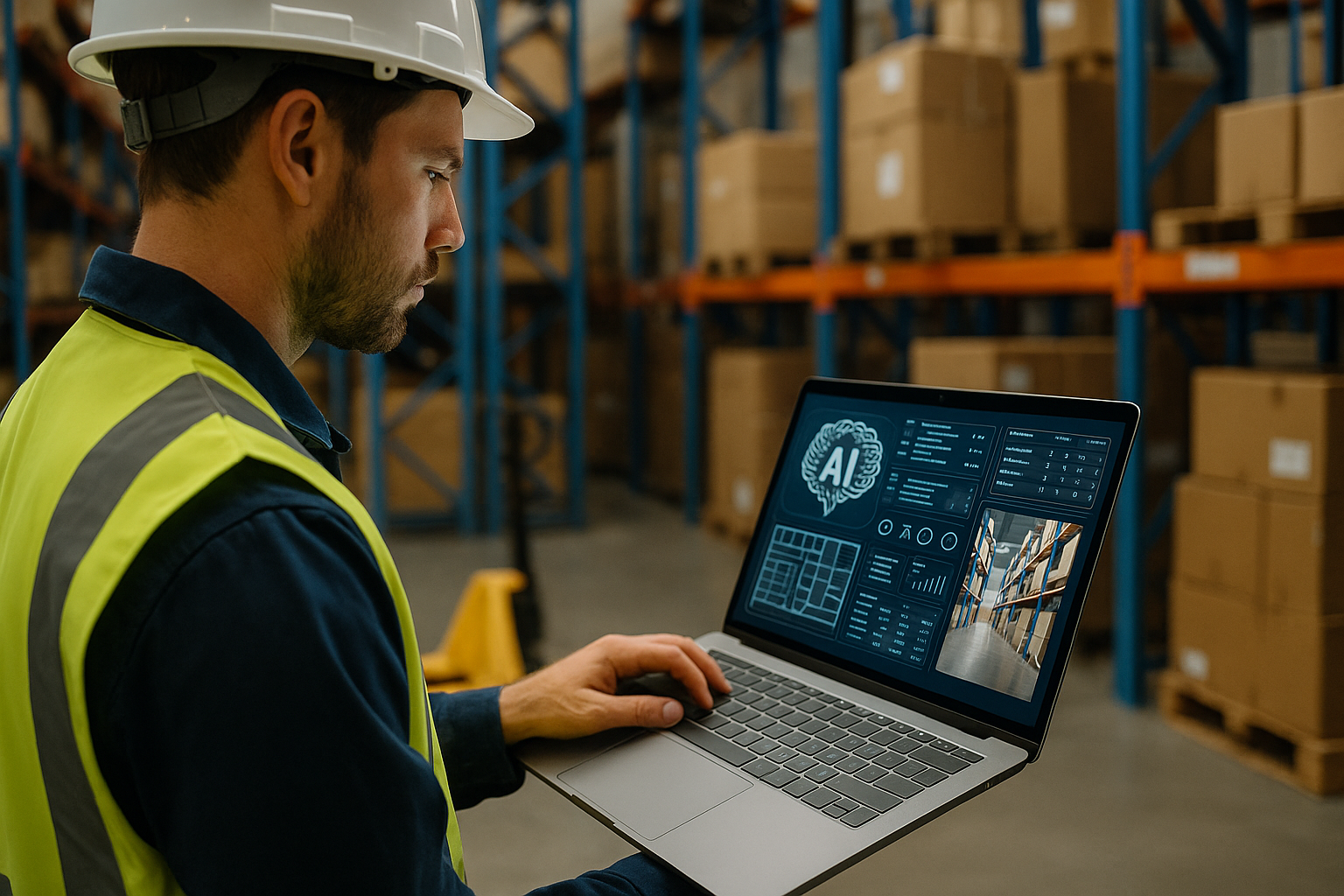
At its core, an AI-powered Warehouse Management System integrates machine learning algorithms, predictive analytics, and automation capabilities with traditional inventory management functions. These systems analyze vast amounts of data in real-time, identifying patterns and making recommendations that would be impossible for human operators to detect manually.
The technology leverages several key AI components: machine learning models that improve accuracy over time, natural language processing for voice-activated operations, computer vision for automated quality control, and neural networks that predict demand fluctuations. Together, these elements create a comprehensive solution that adapts to your unique warehouse environment.
Key Components That Drive Intelligence
Machine learning algorithms form the foundation of intelligent WMS platforms. These algorithms analyze historical data from your warehouse operations—order patterns, seasonal fluctuations, product velocity, and worker productivity—to generate actionable insights. Over time, the system becomes increasingly accurate at predicting which products will be in demand, optimal storage locations, and the most efficient picking routes.
Predictive analytics takes this capability further by forecasting future scenarios. Instead of reacting to stockouts or bottlenecks, AI-powered systems alert managers to potential issues before they occur. This proactive approach reduces emergency shipments, prevents lost sales, and ensures consistent service levels.
💡 Transformative Benefits for Your Operations
Implementing AI-powered WMS solutions delivers measurable improvements across every aspect of warehouse operations. Organizations typically see immediate gains in efficiency, accuracy, and cost reduction, with benefits compounding over time as the system learns and optimizes.
Dramatic Reduction in Picking Errors
Manual picking processes are inherently prone to human error, with typical accuracy rates hovering around 95-97%. While this might seem acceptable, those errors translate to costly returns, customer dissatisfaction, and wasted labor. AI-powered WMS solutions use computer vision and guided workflows to virtually eliminate picking errors, with many operations achieving accuracy rates above 99.9%.
The system guides workers through optimized picking routes, verifies each item selection using barcode scanning or RFID technology, and immediately alerts operators to discrepancies. This real-time validation prevents mistakes before they reach the shipping dock.
Intelligent Space Optimization
Warehouse space represents a significant fixed cost, yet most facilities utilize their available cubic footage inefficiently. Traditional WMS platforms assign static storage locations based on simple rules, failing to account for seasonal variations, product velocity changes, or operational dynamics.
AI-powered systems continuously analyze product movement patterns and automatically reassign storage locations to maximize efficiency. Fast-moving items migrate closer to packing stations, while slow movers shift to higher storage levels. This dynamic slotting reduces travel time, increases picking speed, and allows warehouses to store more inventory in the same footprint.
Predictive Demand Planning That Actually Works
Traditional demand forecasting relies on historical averages and manual adjustments, producing predictions that quickly become obsolete in today’s volatile markets. AI-powered WMS solutions incorporate multiple data sources—historical sales, market trends, weather patterns, social media sentiment, and economic indicators—to generate highly accurate demand forecasts.
These sophisticated predictions enable better inventory positioning, reduced safety stock requirements, and improved cash flow. Businesses can confidently stock popular items without fear of obsolescence while avoiding stockouts that frustrate customers and drive them to competitors.
Seasonal and Trend Adaptation
The most impressive aspect of AI-driven demand planning is its ability to detect emerging trends and seasonal patterns automatically. The system identifies subtle shifts in purchasing behavior that humans might miss, adjusting inventory recommendations accordingly. This responsiveness proves invaluable during unexpected demand surges or market disruptions.
⚙️ Automation Integration and Robotics Coordination
AI-powered WMS platforms excel at orchestrating complex automation systems. Whether coordinating autonomous mobile robots (AMRs), automated storage and retrieval systems (AS/RS), or conveyor networks, the intelligent WMS serves as the central nervous system that keeps everything running smoothly.
The system dynamically assigns tasks to available robots, optimizes their movement patterns to prevent congestion, and seamlessly integrates human workers into automated workflows. This hybrid approach leverages the precision and endurance of machines while maintaining the flexibility and problem-solving capabilities of human operators.
Real-Time Task Allocation
When orders arrive, the AI-powered WMS instantly analyzes current warehouse conditions—robot availability, worker locations, inventory positions, and shipping deadlines—to determine the optimal fulfillment strategy. Tasks are assigned in real-time to maximize throughput while maintaining quality standards.
This dynamic allocation adjusts continuously as conditions change. If a robot encounters an obstacle or a worker completes a task ahead of schedule, the system immediately redistributes assignments to maintain peak efficiency.
Enhanced Labor Management and Productivity
Your warehouse workforce represents your most valuable asset, and AI-powered WMS solutions help you maximize their potential. Rather than replacing workers, these systems augment human capabilities by eliminating tedious tasks, providing intelligent guidance, and creating more engaging work environments.
The platform tracks individual and team performance metrics without punitive micromanagement. Instead, it identifies training opportunities, recognizes top performers, and suggests workflow improvements. Workers receive real-time feedback through mobile devices or wearable technology, enabling immediate course correction and continuous improvement.
Skills-Based Task Assignment
Not all warehouse workers possess identical skills or experience levels. AI-powered systems learn each individual’s strengths, weaknesses, and preferences, assigning tasks accordingly. New employees receive simpler assignments with detailed guidance, while experienced workers tackle complex orders that require judgment and expertise.
This intelligent matching improves job satisfaction, reduces training time, and ensures consistent quality regardless of workforce composition. Seasonal hiring becomes less disruptive as the system seamlessly integrates temporary workers into existing operations.
🔍 Real-Time Visibility and Decision Support
Traditional warehouse management often feels like navigating with incomplete maps and outdated information. AI-powered WMS solutions provide comprehensive, real-time visibility into every aspect of operations, empowering managers to make informed decisions quickly.
Interactive dashboards present key performance indicators, alert managers to anomalies, and drill down into detailed analytics with a few clicks. The system doesn’t just report what happened—it explains why events occurred and recommends corrective actions.
Predictive Alerts and Proactive Management
Rather than waiting for problems to manifest, AI-powered systems issue predictive alerts when conditions suggest potential issues. Low inventory levels, equipment performance degradation, workflow bottlenecks, and quality concerns trigger notifications before they impact operations.
These early warnings enable proactive intervention, preventing small issues from escalating into major disruptions. Managers can address root causes rather than constantly fighting fires, creating a more stable and efficient operation.
Seamless Integration with Enterprise Systems
Modern warehouses don’t operate in isolation—they’re integral components of complex supply chains. AI-powered WMS solutions integrate seamlessly with ERP systems, transportation management platforms, e-commerce storefronts, and customer relationship management tools.
This connectivity ensures data consistency across your organization, eliminating manual data entry and reconciliation processes. When orders flow automatically from your website to the warehouse floor and shipping updates sync instantly with customer accounts, you create a frictionless experience that delights customers and reduces administrative overhead.
API Connectivity and Data Exchange
Robust API frameworks enable AI-powered WMS platforms to communicate with virtually any business system. Whether you’re using popular enterprise software or proprietary legacy systems, modern WMS solutions bridge the gap through flexible integration options.
Real-time data exchange means inventory levels update instantly across all channels, preventing overselling. Order status information flows seamlessly to customer service representatives, enabling accurate responses to inquiries. Financial systems receive accurate warehouse transaction data automatically, ensuring books remain reconciled without manual intervention.
📊 Measuring ROI and Performance Improvements
Investing in AI-powered WMS technology requires justification through tangible returns. Fortunately, these systems deliver measurable improvements across multiple dimensions, typically achieving payback periods of 12-24 months.
Common performance improvements include 25-40% increases in picking productivity, 50-70% reductions in inventory carrying costs, 30-50% decreases in order fulfillment time, and near-elimination of shipping errors. Beyond these operational metrics, businesses report improved customer satisfaction scores, reduced employee turnover, and increased capacity without facility expansion.
Building Your Business Case
When evaluating AI-powered WMS solutions, consider both hard and soft benefits. Direct cost savings from labor efficiency and error reduction are easily quantifiable, but don’t overlook strategic advantages like improved scalability, competitive differentiation, and organizational agility.
Calculate your current costs for inventory carrying, order processing, returns handling, and expedited shipping. Then model how AI-powered capabilities would impact these metrics based on industry benchmarks and vendor case studies. Most organizations discover the investment pays for itself faster than anticipated.
Implementation Strategies for Success
Deploying AI-powered WMS technology requires careful planning and change management. Successful implementations follow structured methodologies that minimize disruption while accelerating time-to-value.
Begin with thorough process documentation and gap analysis. Understand your current workflows, pain points, and performance baselines. This foundation enables you to configure the new system appropriately and measure improvement accurately.
Phased Rollout Approaches
Rather than attempting a “big bang” implementation that risks operational chaos, consider phased deployment strategies. Start with a pilot in one warehouse zone or product category, validate the benefits, refine configurations, and then expand systematically.
This incremental approach reduces risk, allows workers to adapt gradually, and provides opportunities to course-correct based on real-world feedback. Early wins build organizational confidence and support for broader adoption.
🎯 Selecting the Right AI-Powered WMS Partner
The market offers numerous AI-powered WMS solutions, each with distinct strengths, limitations, and ideal use cases. Selecting the right platform requires careful evaluation of your specific requirements, growth trajectory, and technical environment.
Prioritize vendors with proven experience in your industry and warehouse complexity level. Request detailed demonstrations using your actual data and workflow scenarios. Check references thoroughly, focusing on implementation experiences and ongoing support quality.
Key Evaluation Criteria
Assess potential solutions across multiple dimensions: AI capability maturity, integration flexibility, user interface intuitiveness, scalability, vendor financial stability, and total cost of ownership. Don’t be swayed solely by impressive demos—dig into the technical architecture, data security practices, and customization limitations.
Consider whether cloud-based or on-premise deployment better suits your requirements. Cloud solutions offer faster implementation and automatic updates but may raise data security concerns for some organizations. On-premise deployments provide greater control but require more internal IT resources.
Future-Proofing Your Warehouse Operations
Technology continues evolving rapidly, and your WMS investment should remain valuable for years to come. AI-powered platforms built on modern architectures adapt to emerging technologies like 5G connectivity, edge computing, augmented reality, and advanced robotics.
Choose solutions designed with extensibility in mind. The system should accommodate new automation equipment, integrate with emerging technologies, and scale seamlessly as your business grows. Regular software updates should introduce new AI capabilities without requiring complete reimplementation.
The warehouse operations landscape will continue transforming as AI technology matures. Organizations that embrace these capabilities now position themselves for sustained competitive advantage, operational excellence, and exceptional customer experiences. The question isn’t whether to adopt AI-powered WMS solutions, but how quickly you can realize their transformative potential.
Your journey toward intelligent warehouse operations begins with understanding your current challenges, envisioning your ideal future state, and selecting technology partners committed to your success. The investment in AI-powered WMS technology pays dividends through improved efficiency, reduced costs, and the organizational agility required to thrive in an increasingly competitive marketplace.