Computer vision technology is reshaping how retailers identify products, manage inventory, and enhance customer experiences, driving efficiency and profitability across the industry.

🛒 The Visual Revolution in Modern Retail
The retail landscape is undergoing a dramatic transformation, powered by artificial intelligence and computer vision technologies that can “see” and interpret visual data much like human eyes—but with unprecedented speed and accuracy. This technological leap is fundamentally changing how stores operate, from checkout processes to inventory management, and even how customers interact with products.
Computer vision systems use cameras, sensors, and sophisticated algorithms to analyze images and videos in real-time. In retail environments, these systems can identify products instantly, track customer movements, monitor shelf inventory, and detect anomalies that might indicate theft or operational issues. The impact extends far beyond simple automation—it’s creating entirely new possibilities for customer engagement and operational excellence.
Major retailers worldwide are investing billions in these technologies, recognizing that the future of retail depends on seamless integration between physical and digital experiences. From Amazon Go’s cashierless stores to Walmart’s intelligent inventory systems, computer vision is no longer experimental—it’s becoming essential infrastructure.
Understanding Computer Vision Technology in Retail Context
Computer vision combines several technological components to create systems capable of understanding visual information. At its core, the technology relies on deep learning neural networks trained on millions of images to recognize patterns, objects, and behaviors with remarkable precision.
In retail applications, computer vision systems typically include high-resolution cameras strategically positioned throughout stores, edge computing devices that process data locally for faster response times, and cloud-based analytics platforms that aggregate insights across multiple locations. These components work together to create a comprehensive visual intelligence network.
Key Technologies Powering Retail Vision Systems
Several technological advancements have converged to make computer vision practical and cost-effective for retail applications. Convolutional Neural Networks (CNNs) form the foundation of most image recognition systems, capable of identifying products even when partially obscured or viewed from unusual angles. These networks can distinguish between thousands of different products with accuracy rates exceeding 99%.
Object detection algorithms enable systems to locate and identify multiple items simultaneously within a single image frame. This capability is crucial for scenarios like automated checkout, where a customer might place several items on a counter at once, or for shelf monitoring where hundreds of products need continuous tracking.
Real-time processing capabilities have improved dramatically, allowing systems to analyze video streams instantly rather than requiring batch processing. This immediacy enables immediate responses to customer actions, inventory changes, or security concerns.
📊 Transforming Product Identification at Scale
Product identification represents one of the most impactful applications of computer vision in retail. Traditional barcode scanning requires manual handling and proper orientation of products, creating bottlenecks at checkout and during inventory counts. Computer vision eliminates these constraints entirely.
Modern visual recognition systems can identify products from any angle, even when packaging is damaged or partially hidden. They can distinguish between similar items based on subtle visual differences—something particularly valuable for fresh produce, bakery items, or products without consistent packaging.
This capability extends beyond simple identification. Computer vision systems can verify product authenticity, detect damaged goods, confirm proper product placement on shelves, and even assess freshness of perishable items through visual indicators like color changes or ripeness markers.
The Cashierless Shopping Revolution
Amazon Go stores pioneered the concept of “Just Walk Out” shopping, where customers simply pick up items and leave without traditional checkout. This experience relies heavily on computer vision systems that track every product a customer selects or returns to shelves throughout their shopping journey.
Multiple cameras positioned throughout the store create a comprehensive view of all customer interactions with merchandise. Advanced algorithms associate each product with the correct customer account, automatically charging them as they exit. The technology must handle complex scenarios—distinguishing between customers in crowded aisles, tracking products through shopping bags, and managing item returns.
Other retailers have adopted similar approaches with variations tailored to their specific formats. Some use smart shopping carts equipped with cameras that identify items as they’re placed inside. Others employ hybrid systems combining computer vision with weight sensors and RFID tags for enhanced accuracy.
Streamlining Inventory Management Through Visual Intelligence
Inventory management has traditionally been one of retail’s most labor-intensive and error-prone processes. Manual stock counts are time-consuming, expensive, and often inaccurate. Computer vision is revolutionizing this critical function by enabling continuous, automated inventory monitoring.
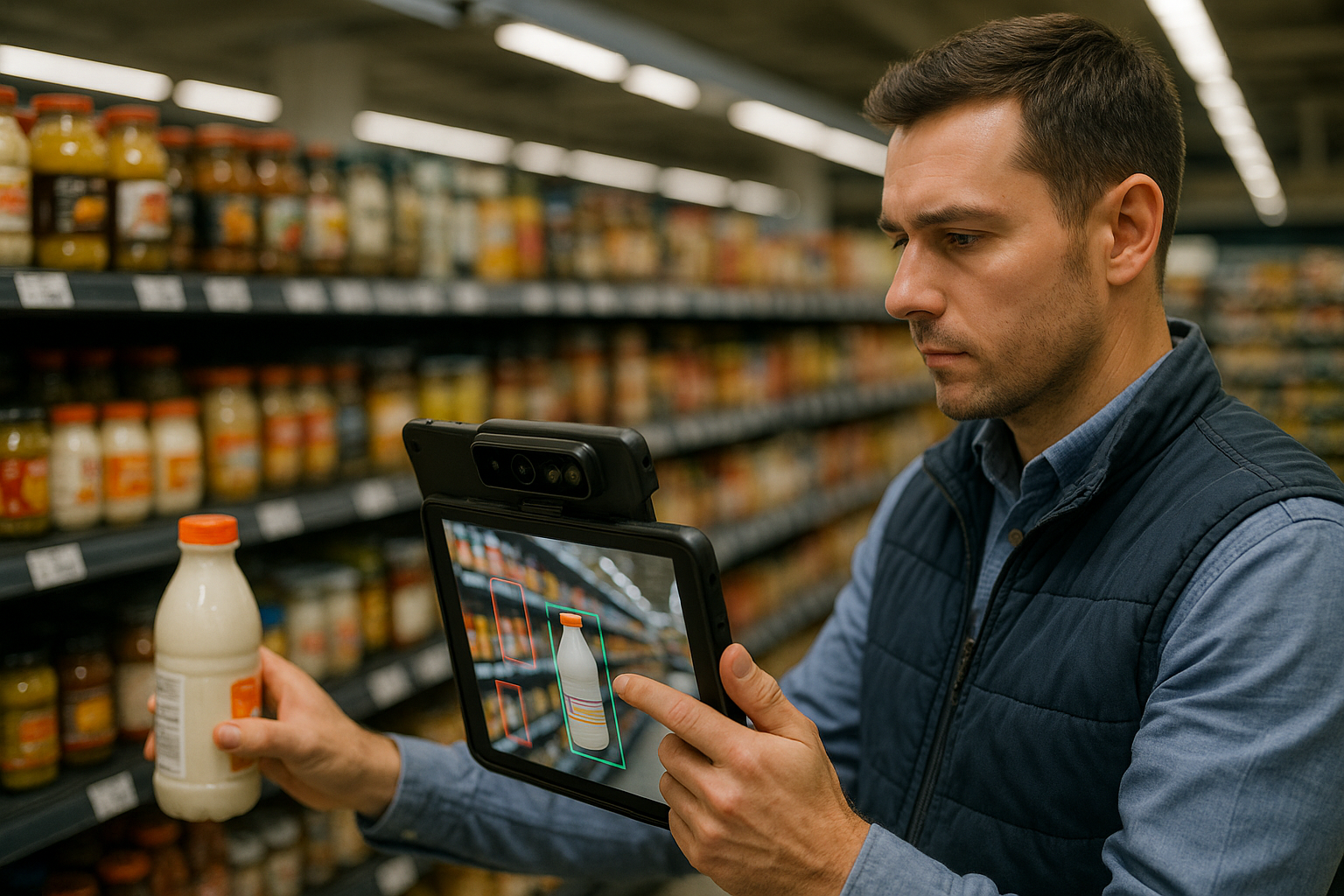
Shelf-scanning systems use cameras mounted on robots or drones that traverse store aisles during off-hours, capturing images of every shelf. Computer vision algorithms analyze these images to determine which products are present, their quantities, proper positioning, and pricing accuracy. This process that once took teams of employees hours to complete can now happen multiple times daily without human intervention.
The benefits extend beyond labor savings. Real-time inventory visibility prevents stockouts of popular items, identifies misplaced products that might otherwise go unsold, and ensures pricing compliance across all locations. Retailers gain unprecedented insight into how inventory moves through their stores, enabling more precise forecasting and ordering.
Dynamic Shelf Monitoring and Planogram Compliance
Product placement significantly impacts sales, with premium shelf positions commanding higher prices from manufacturers. Ensuring products remain in designated locations according to planograms is crucial for maximizing revenue and maintaining supplier agreements.
Computer vision systems continuously verify planogram compliance, alerting staff when products are misplaced or when shelves need restocking. These systems can distinguish between hundreds of similar-looking products, identifying even small deviations from intended layouts. The technology also tracks how quickly different products sell from various positions, providing data to optimize future planograms based on actual performance rather than assumptions.
🎯 Enhancing Customer Experience Through Visual Recognition
Beyond operational efficiency, computer vision creates new opportunities for enriching customer experiences. Visual search capabilities allow shoppers to photograph products they like and instantly find similar items available in-store or online. This bridges the gap between inspiration and purchase, reducing friction in the shopping journey.
Smart mirrors in fitting rooms use computer vision to suggest complementary items based on what customers are trying on. These systems recognize clothing items and can display accessories, shoes, or alternative sizes without requiring customers to return to the sales floor.
Personalized recommendations become more contextual when systems can see what customers are considering rather than relying solely on purchase history. A customer examining athletic shoes might receive suggestions for running apparel, even if they’ve never purchased athletic wear before.
Virtual Try-On and Augmented Reality Applications
Computer vision enables augmented reality experiences that let customers virtually try products before purchasing. Cosmetics retailers use facial recognition and rendering technologies to show how different makeup shades would look on individual customers. Furniture retailers allow customers to visualize how items would appear in their homes through smartphone cameras.
These applications reduce return rates by helping customers make more informed decisions. They also create engaging experiences that differentiate brands and encourage social sharing, turning customers into brand ambassadors.
Loss Prevention and Security Applications
Retail shrinkage from theft, fraud, and errors costs businesses billions annually. Computer vision provides sophisticated tools for identifying and preventing losses without creating friction for legitimate customers.
Advanced systems can detect suspicious behaviors—such as customers concealing merchandise or lingering in particular areas—and alert security personnel to potential issues. Unlike traditional surveillance that requires constant human monitoring, computer vision systems continuously analyze all camera feeds simultaneously, focusing human attention only where needed.
At checkout, vision systems verify that all items in shopping carts have been properly scanned, flagging discrepancies between what cameras see and what’s been rung up. This catches both intentional theft and honest mistakes, protecting revenue without creating confrontational situations.
Fraud Detection at Self-Checkout Stations
Self-checkout systems, while convenient, create opportunities for fraud through techniques like scanning expensive items as cheaper produce or leaving items in carts without scanning. Computer vision systems monitor self-checkout stations, comparing what customers scan against visual observations of what they’re actually purchasing.
These systems can identify specific fraud patterns—such as repeatedly scanning the same low-priced item while placing different items in bags—and either automatically intervene or alert staff. The presence of such monitoring serves as a deterrent, reducing losses while maintaining the convenience self-checkout provides.
⚙️ Operational Efficiency and Workforce Optimization
Computer vision analytics provide insights that help retailers optimize staffing levels, store layouts, and operational processes. Heat mapping technologies show which store areas receive the most traffic and when, enabling better staff deployment during peak periods and informing decisions about product placement in high-visibility zones.
Queue management systems monitor checkout lines and alert managers when additional registers should open, reducing customer wait times without maintaining excess capacity during slower periods. This balance between customer service and operational efficiency directly impacts both satisfaction and profitability.
Task management becomes more intelligent when systems can identify operational needs automatically. If vision systems detect empty shelves, low inventory, or misplaced products, they can create priority task lists for staff, ensuring the most important issues receive immediate attention.
Implementation Challenges and Considerations
Despite its transformative potential, implementing computer vision in retail environments presents several challenges. Initial infrastructure costs can be substantial, requiring investment in cameras, computing hardware, networking equipment, and software platforms. Organizations must carefully evaluate return on investment timelines and prioritize applications with the clearest business cases.
Integration with existing systems—point-of-sale platforms, inventory management software, and customer relationship management tools—requires careful planning and often custom development work. Legacy systems may not readily accommodate the data streams and insights computer vision generates.
Privacy Concerns and Ethical Considerations
The use of cameras and facial recognition technology in retail spaces raises legitimate privacy concerns. Customers may feel uncomfortable knowing their movements and behaviors are being tracked and analyzed, even if data is anonymized and used solely for operational purposes.
Retailers must navigate varying regulatory landscapes, with different jurisdictions imposing different requirements around customer notification, data retention, and facial recognition usage. Transparent communication about what data is collected, how it’s used, and what protections are in place helps build customer trust.
Ethical implementation requires clear policies limiting technology use to legitimate business purposes, protecting customer data, and respecting individual privacy rights. Organizations that prioritize responsible deployment will build competitive advantages through customer trust while avoiding regulatory complications.
🚀 Future Directions and Emerging Capabilities
Computer vision technology continues evolving rapidly, with new capabilities emerging regularly. Edge computing advances enable more processing to occur directly on cameras and local devices, reducing latency and bandwidth requirements while improving system responsiveness.
3D vision systems that capture depth information alongside traditional 2D images enable even more sophisticated product recognition and spatial understanding. These systems can precisely measure products, assess volumes, and create detailed three-dimensional maps of store environments.
Integration with other AI technologies creates powerful synergies. Combining computer vision with natural language processing allows systems to answer customer questions about products they’re viewing. Pairing vision with predictive analytics enhances demand forecasting by incorporating visual data about customer interactions with products beyond simple purchase history.
Autonomous Store Operations
The logical extension of current trends points toward increasingly autonomous retail operations. Robotic systems combining computer vision with mechanical capabilities can handle restocking, cleaning, and inventory management with minimal human oversight. Mobile robots navigate store aisles, identifying products needing attention and either addressing issues directly or alerting human staff.
These autonomous systems work collaboratively with human employees rather than replacing them, handling repetitive tasks while freeing people for higher-value activities requiring judgment, creativity, and interpersonal skills—areas where humans continue to excel over artificial intelligence.
Strategic Recommendations for Retail Implementation
Organizations considering computer vision adoption should begin with clearly defined business problems rather than implementing technology for its own sake. Identify specific pain points—whether inventory accuracy, checkout speed, loss prevention, or customer experience—and evaluate how computer vision might address those challenges.
Pilot projects allow organizations to test technologies on limited scales, learning lessons and refining approaches before committing to full deployments. Starting with a single store or even a single application within one store provides valuable experience managing both technical and change management aspects.
Building internal expertise is crucial for long-term success. While vendors can provide initial implementation and support, organizations need team members who understand both the technology and business context to optimize systems over time and identify new opportunities for value creation.
💡 Measuring Success and ROI
Establishing clear metrics for evaluating computer vision initiatives ensures accountability and enables continuous improvement. Different applications require different success measures—checkout systems might focus on transaction speed and accuracy, while inventory systems emphasize stock accuracy and reduction in manual counting hours.
Financial metrics should encompass both direct cost savings and revenue enhancements. Direct savings come from labor reduction, shrinkage prevention, and operational efficiency improvements. Revenue benefits include sales increases from better inventory availability, enhanced customer experiences, and improved product placement.
Qualitative factors also matter significantly. Customer satisfaction improvements, employee satisfaction from eliminating tedious tasks, and competitive positioning advantages all contribute value that may not appear immediately in financial statements but drives long-term success.
The Competitive Imperative of Visual Intelligence
Computer vision has transitioned from experimental technology to competitive necessity in retail. Organizations that successfully implement these capabilities gain significant advantages in operational efficiency, customer experience, and data-driven decision making. Those that delay adoption risk falling behind competitors who leverage these tools to operate more effectively.
The technology’s maturity and decreasing costs make adoption increasingly accessible to retailers of all sizes, not just industry giants with unlimited budgets. Cloud-based solutions and software-as-a-service models allow smaller organizations to access sophisticated capabilities without massive upfront investments.
As consumer expectations continue evolving toward seamless, personalized, frictionless shopping experiences, computer vision provides essential infrastructure for meeting those expectations. The retailers thriving in coming years will be those embracing visual intelligence as a core operational capability rather than a peripheral enhancement.
The revolution in retail through computer vision represents more than technological change—it’s a fundamental reimagining of how physical retail spaces function and what they can offer customers. By enabling stores to “see” and understand their environments with unprecedented clarity, these systems unlock efficiencies, insights, and experiences previously impossible, positioning forward-thinking retailers for success in an increasingly competitive landscape.