
Global supply chains face unprecedented threats from geopolitical tensions, natural disasters, and operational disruptions that can halt business operations overnight.

🌍 The New Reality of Supply Chain Vulnerability
Modern businesses operate in an interconnected world where a single disruption thousands of miles away can cascade into significant financial losses. The COVID-19 pandemic exposed critical weaknesses in traditional supply chain management, with companies losing billions due to delayed shipments, port closures, and factory shutdowns. Today’s supply chain professionals must embrace technology-driven solutions that provide real-time visibility and proactive risk management.
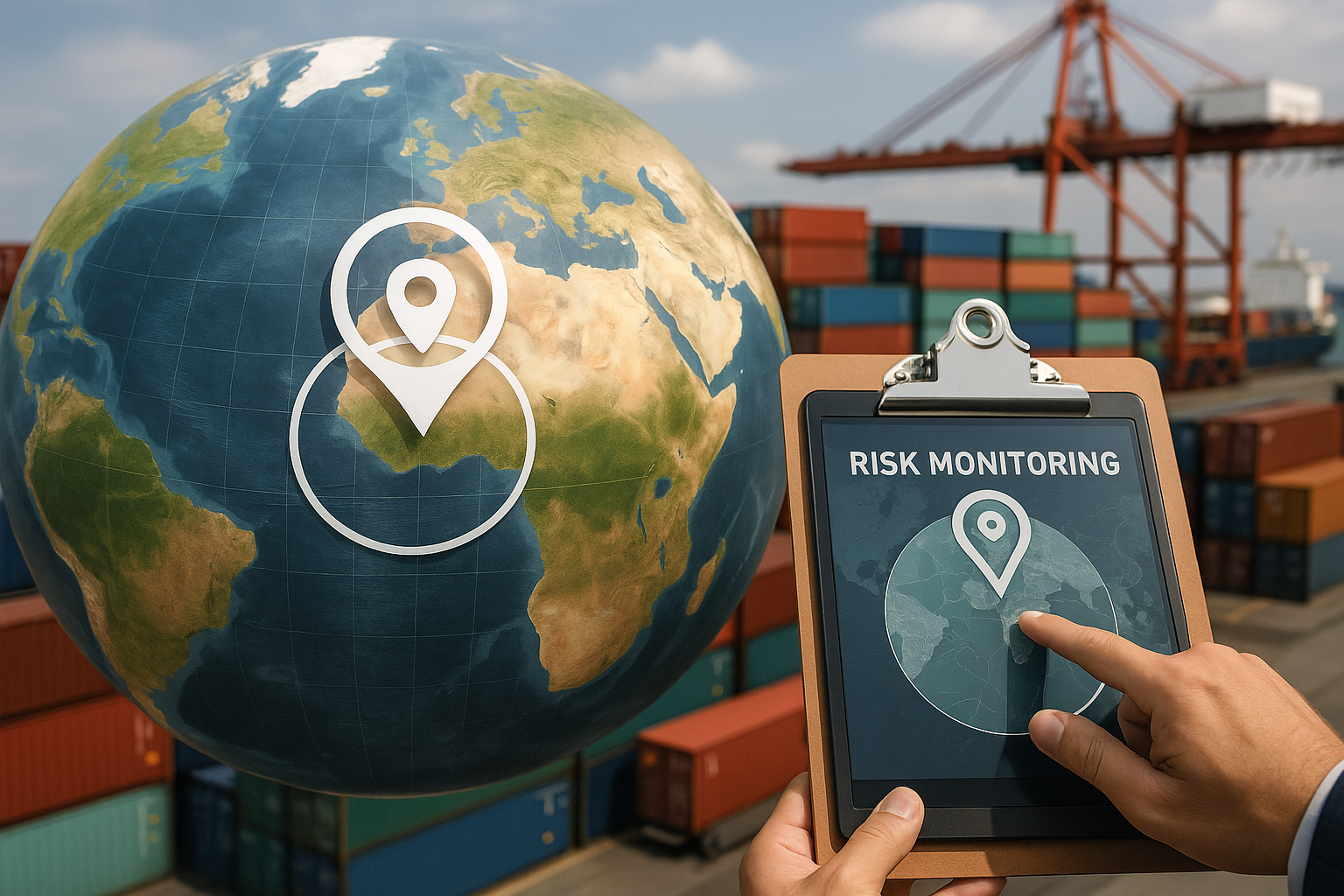
Geofencing and risk monitoring have emerged as essential tools for companies seeking to maintain competitive advantages while protecting their supply chains. These technologies enable businesses to create virtual boundaries around critical locations, monitor shipments in real-time, and receive instant alerts when potential disruptions occur. The integration of these systems transforms reactive supply chain management into proactive risk mitigation.
Understanding Geofencing Technology in Supply Chain Management
Geofencing creates virtual perimeters around geographical locations using GPS, RFID, Wi-Fi, or cellular data. When a tracked asset enters or exits these predetermined boundaries, the system triggers automated alerts and actions. This technology has revolutionized how companies monitor shipments, manage inventory, and ensure compliance with regulatory requirements.
The applications of geofencing extend far beyond simple location tracking. Companies use these virtual boundaries to automate documentation processes, verify delivery confirmations, monitor dwell times at ports and warehouses, and ensure shipments follow approved routes. This level of control reduces fraud, improves efficiency, and provides unprecedented transparency throughout the supply chain.
Key Components of Geofencing Systems
Effective geofencing solutions incorporate multiple technological elements that work together seamlessly. GPS tracking devices attached to containers, vehicles, or individual packages provide continuous location data. Cloud-based platforms process this information and compare it against predetermined geofences. Machine learning algorithms analyze patterns and predict potential delays or deviations.
Integration with existing enterprise resource planning (ERP) and transportation management systems (TMS) ensures that geofencing data flows directly into operational workflows. This connectivity eliminates data silos and enables automated responses to geofencing events. For example, when a shipment arrives at a distribution center, the system can automatically update inventory records, notify receiving personnel, and schedule unloading resources.
🔍 Risk Monitoring: Your Early Warning System
Risk monitoring systems continuously scan global events, weather patterns, political situations, and market conditions to identify potential threats to supply chains. These platforms aggregate data from thousands of sources, including news feeds, government databases, social media, and proprietary networks. Advanced analytics transform this raw information into actionable insights that enable proactive decision-making.
The sophistication of modern risk monitoring tools allows companies to assess threats across multiple dimensions simultaneously. Political instability in a supplier country, severe weather approaching a shipping route, labor strikes at key ports, and currency fluctuations all receive real-time evaluation. The system assigns risk scores to different scenarios and recommends mitigation strategies based on historical data and predictive modeling.
Types of Supply Chain Risks to Monitor
Geopolitical risks represent one of the most challenging categories to manage. Trade wars, sanctions, border disputes, and regulatory changes can suddenly render established supply routes unusable. Companies must monitor political developments in all countries where they source materials, manufacture products, or ship goods. Early warning of potential disruptions allows time to activate alternative suppliers or routes.
Natural disasters and climate events pose increasingly frequent threats to global supply chains. Hurricanes, earthquakes, floods, and wildfires can damage infrastructure, close facilities, and interrupt transportation networks. Risk monitoring systems track weather patterns and geological activity, providing advance notice that enables companies to reroute shipments or build inventory buffers before disruptions occur.
Operational risks emerge from supplier failures, quality issues, capacity constraints, and technology breakdowns. Monitoring systems should track supplier financial health, production capacity utilization, quality metrics, and delivery performance. This visibility helps identify potential problems before they impact production schedules or product availability.
Integrating Geofencing with Risk Intelligence
The true power of supply chain protection emerges when geofencing technology combines with comprehensive risk monitoring. This integration creates a dynamic system that not only tracks where assets are located but also understands the risk environment surrounding those locations. When a shipment enters a geofenced area experiencing elevated risk levels, the system triggers enhanced monitoring protocols and contingency planning.
For example, if a container ship approaches a port where labor negotiations are breaking down, the integrated system can alert logistics managers while simultaneously identifying alternative ports and calculating rerouting costs. This combination of location awareness and risk intelligence enables rapid response to changing conditions, minimizing disruptions and controlling costs.
Building a Unified Command Center
Successful implementation requires consolidating geofencing data and risk intelligence into a single operational dashboard. This command center provides supply chain managers with comprehensive visibility across their entire network. Color-coded maps display shipment locations overlaid with current risk levels for different regions. Interactive alerts allow users to drill down into specific situations and access recommended actions.
The command center should offer multiple views tailored to different roles within the organization. Logistics coordinators need detailed tracking information and carrier performance metrics. Procurement teams require supplier risk assessments and alternative sourcing options. Executive leadership wants summary dashboards showing overall supply chain health and exposure to various risk categories.
💡 Practical Implementation Strategies
Deploying geofencing and risk monitoring capabilities requires careful planning and phased execution. Companies should begin by identifying their most critical supply chain segments—the routes, suppliers, and products that represent the highest value or greatest vulnerability. Pilot programs focused on these priority areas demonstrate value quickly while limiting initial investment and complexity.
Technology selection demands thorough evaluation of available platforms and service providers. Consider factors including:
- Global coverage and accuracy of location tracking
- Breadth and quality of risk data sources
- Integration capabilities with existing systems
- Scalability to accommodate growth and changing needs
- User interface design and ease of adoption
- Customer support and implementation assistance
- Total cost of ownership including hardware, software, and services
Change Management and User Adoption
Technology alone cannot secure supply chains—people must embrace and effectively use these tools. Comprehensive training programs ensure that team members understand how to interpret alerts, execute contingency plans, and leverage system capabilities. Create clear standard operating procedures that define responsibilities and response protocols for different risk scenarios.
Encourage adoption by demonstrating tangible benefits to individual users. Show logistics coordinators how geofencing reduces time spent tracking shipments. Help procurement managers understand how risk monitoring improves supplier selection decisions. Share success stories where the system prevented disruptions or identified cost-saving opportunities.
📊 Measuring Success and ROI
Quantifying the value of geofencing and risk monitoring investments requires establishing clear metrics before implementation. Track key performance indicators that reflect both operational improvements and risk mitigation outcomes. Common metrics include on-time delivery rates, shipment visibility percentages, average response time to disruptions, cost of supply chain interruptions, and inventory carrying costs.
| Metric Category | Key Performance Indicators | Expected Impact |
|---|---|---|
| Visibility | % of shipments tracked in real-time | Increase from 40% to 95%+ |
| Reliability | On-time delivery performance | Improvement of 10-15% |
| Efficiency | Dwell time at transfer points | Reduction of 20-30% |
| Risk Mitigation | Cost of supply chain disruptions | Decrease of 25-40% |
| Customer Satisfaction | Order fulfillment accuracy | Improvement of 5-10% |
Calculate return on investment by comparing system costs against measurable benefits. Include both hard savings like reduced expedited shipping expenses and inventory optimization, plus soft benefits such as improved customer satisfaction and competitive advantages. Most companies achieve positive ROI within 12-18 months of full implementation.
Advanced Applications and Future Trends
Artificial intelligence and machine learning are transforming geofencing and risk monitoring from reactive tools into predictive platforms. These technologies analyze historical patterns, identify correlations between different risk factors, and forecast potential disruptions with increasing accuracy. Predictive algorithms can suggest optimal routes, recommend inventory positioning, and automate supplier diversification strategies.
Blockchain technology offers promising applications for supply chain security and transparency. Immutable records of shipment movements, custody transfers, and condition monitoring create verifiable audit trails that reduce fraud and errors. Smart contracts automatically execute agreements when geofencing conditions are met, streamlining processes and reducing administrative overhead.
🚀 The Internet of Things Advantage
IoT sensors embedded in containers and products provide rich data beyond simple location tracking. Temperature sensors ensure cold chain compliance for pharmaceutical and food shipments. Shock sensors detect rough handling that might damage fragile goods. Humidity monitors prevent moisture-related spoilage. This multi-dimensional visibility enables proactive quality management and reduces claims and returns.
The proliferation of 5G networks will dramatically enhance real-time monitoring capabilities. Higher bandwidth and lower latency enable more frequent data transmission from tracking devices, effectively eliminating blind spots in supply chain visibility. Enhanced connectivity also supports edge computing applications where initial data processing occurs on tracking devices themselves, reducing cloud infrastructure requirements and improving response times.
Building Resilience Through Strategic Partnerships
No company can manage all supply chain risks alone. Strategic partnerships with logistics providers, technology vendors, and industry peers strengthen overall resilience. Collaborate with carriers who have invested in their own tracking and risk management capabilities. Choose technology partners committed to continuous innovation and platform development. Participate in industry consortiums that share threat intelligence and best practices.
Consider managed service arrangements where specialized providers operate risk monitoring systems on your behalf. These services offer access to sophisticated capabilities without requiring internal expertise or infrastructure investments. Managed service providers bring cross-industry insights and can often identify risks that individual companies might overlook.
Regulatory Compliance and Competitive Advantage
Government regulations increasingly mandate supply chain transparency and security. Customs agencies require advance cargo information and container tracking. Environmental regulations demand proof of sustainable sourcing and carbon footprint monitoring. Geofencing and risk monitoring systems generate documentation that demonstrates compliance while reducing manual reporting burdens.
Beyond meeting regulatory requirements, supply chain visibility creates significant competitive advantages. Companies can offer customers accurate delivery estimates backed by real-time tracking. Retailers can optimize inventory levels based on precise arrival predictions. Manufacturers can adjust production schedules dynamically as component shipments progress toward facilities. This responsiveness differentiates market leaders from competitors stuck with outdated supply chain practices.
🎯 Taking Action: Your Implementation Roadmap
Begin your supply chain security journey by conducting a comprehensive risk assessment. Map your entire supply network including suppliers, manufacturing locations, distribution centers, and transportation routes. Identify critical nodes where disruptions would cause the greatest impact. Evaluate current visibility gaps and risk monitoring capabilities to understand where improvements offer the highest value.
Develop a phased implementation plan that builds capabilities progressively. Start with pilot programs covering high-priority routes or product categories. Use these pilots to refine processes, validate technology selections, and demonstrate value to stakeholders. Expand gradually as confidence and expertise grow, eventually achieving comprehensive coverage across the entire supply chain.
Allocate sufficient resources for ongoing system management and continuous improvement. Assign dedicated personnel to monitor alerts, coordinate responses, and analyze trends. Schedule regular reviews of geofencing parameters and risk thresholds to ensure they remain appropriate as business conditions change. Invest in training and development so your team’s capabilities evolve alongside technology advancements.
Transforming Supply Chain Management for the Digital Age
The convergence of geofencing technology and risk monitoring represents a fundamental shift in supply chain management philosophy. Rather than accepting disruptions as inevitable and focusing solely on recovery, modern approaches emphasize prevention and proactive mitigation. Real-time visibility combined with predictive intelligence enables companies to operate with confidence even in volatile global markets.
Success requires more than technology implementation—it demands cultural change within organizations. Supply chain teams must embrace data-driven decision making and continuous monitoring. Leadership must support investments in capabilities that prevent problems rather than only responding after issues arise. Cross-functional collaboration ensures that insights flow throughout the organization and inform strategic planning.
The companies that thrive in coming decades will be those that view supply chain security as a strategic capability rather than operational overhead. Geofencing and risk monitoring provide the foundation for resilient, responsive, and competitive supply chain operations. The question is not whether to adopt these technologies, but how quickly you can implement them to protect and enhance your global trade success.